



A complete garage door repair estimate should include the scope of work, parts, labor, fees, warranty terms, and a replacement alternative. Having those items in writing before work begins lets a household approve a price knowing exactly what the payment covers and what it leaves out.
Two estimates for the same garage door issue can show the same total yet describe different jobs, since parts grade, labor hours, and warranty terms may differ. This guide outlines six estimate items, explains what they should state, and shows which questions to ask before approving work.
Key Takeaways
- Scope of work names the exact repair, not a general complaint.
- Parts lists state grade, quantity, and price per component.
- Labor lines show hours and rate, plus any diagnostic charge.
- Warranty terms and replacement pricing belong on the estimate.
- Questions asked before approval prevent changes after work starts.
Key Items in a Garage Door Repair Estimate
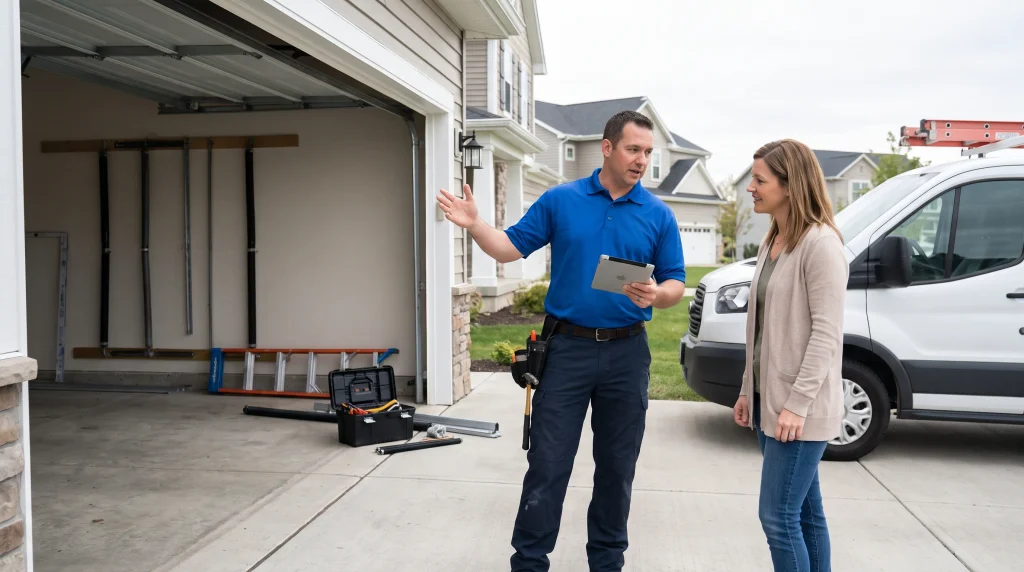
Formats differ between companies, but for common issues, a complete estimate gives a household enough detail to judge the price and the work before approving either.
| Estimate Item | What It Should State | Question to Ask |
| Scope of work | The exact repair and the diagnosis behind it | What caused the problem? |
| Parts list | Component names, grade, and quantity | Are the parts new or refurbished? |
| Labor | Hours, rate, and technician count | How many hours does the job need? |
| Fees and taxes | Service call, disposal, and tax lines | Which fees apply to this job? |
| Warranty | Parts and labor coverage periods | What voids the coverage? |
| Alternatives | Replacement pricing for comparison | At what point does replacement make sense? |
Missing lines are far easier to address before work begins than after payment, so the written estimate is the best time to ask questions.
Scope of Work and Diagnosis
Scope of work states what the technician found and what will be done about it, giving the household a clear record of the repair being approved.
Strong scope sections include:
- Reported symptoms appear alongside the diagnosis the technician reached.
- Named services, such as cable or roller work, replace vague repair labels.
- Photos or notes document the extent of the damage found.
- Moving parts, including the spring assembly, are listed with inspection results.
- Excluded work, such as proper alignment of tracks, is stated plainly.
Detailed wording protects both sides by defining the approved work and leaving no room for unexplained additions once the repair is underway.
Parts List and Specifications
Parts lines drive much of the variation between quotes, so naming grade, brand, and quantity for the type of garage door keeps comparisons honest.
Complete parts lists show:
- Torsion springs or extension springs listed by wire size and cycle rating.
- Roller, hinge, and cable specifications with quantities and unit prices.
- Replacement parts identified as new, refurbished, or manufacturer original.
- Garage door opener components, including any faulty opener part, listed by model.
- Panel materials and finishes for wood doors, custom doors, and steel garage doors.
To trace which parts grade, sourcing, and door details push a quote higher or lower, read our guide on What Factors Affect Garage Door Repair Cost in Los Angeles?, which explains how those variables move the final price.
Labor Charges and Time
Labor lines convert technician time into a price, so stating hours, rate, and crew size makes this part of an estimate easy to verify.
Labor sections spell out:
- Estimated hours and the hourly rate behind the labor total.
- Crew size when a spring repair or similar job requires two technicians.
- Time reserved for high-tension tasks, such as garage door spring work.
- Diagnostic or service call time billed separately from repair time.
- After-hours or emergency garage door repair service surcharges applied to labor rates.
Clear labor lines keep labor costs predictable, since changes in hours require approval before the final repair bill is calculated and presented for payment.
Fees, Taxes, and Total Price
Fees and taxes sit beside parts and labor on the estimate, and listing them separately makes total repair costs easy to audit line by line.
Price summaries should cover:
- Service call or diagnostic fees with a note on credit toward repairs.
- Disposal or haul-away charges for parts removed from the door.
- Sales tax on parts, calculated and shown on its own line.
- Permit charges and other project costs when the job requires them.
- The total cost, with accepted payment methods and the deposit amount.
To benchmark an estimate total against typical local pricing, read our guide on How Much Does Garage Door Repair Cost in Los Angeles?, which covers price ranges by repair type, along with labor rates and service fees.
Warranty Terms and Conditions
Coverage language tells a household what happens if the same problem returns, so clear wording for parts and labor protects the repair over the long run.
Warranty clauses should define:
- Coverage length for parts and for labor, stated separately.
- Components included in the warranty and any listed exclusions.
- Conditions that void coverage, such as work done without professional installation.
- Required upkeep, from routine to annual garage door maintenance visits.
- Claim steps, including who to contact and what to provide.
Valid claims often depend on documented upkeep, so keeping service records with the estimate protects the repair for as long as the warranty lasts.
Repair and Replacement Alternatives
Alternatives give context to a repair price, since a replacement quote with installation costs shows whether the type of repair is a reasonable investment.
Useful alternatives sections include:
- Replacement pricing that lists the new door and garage door installation separately.
- Partial options, like replacing one panel on steel doors to restore curb appeal.
- Notes on when expensive repairs approach the average replacement cost.
- Upgrades available with replacement, including popular materials, a remote opener, and smart openers.
- Technician notes explaining why an easy fix or replacement suits an old door.
To compare a borderline repair with garage door replacement cost, read our guide on Is Garage Door Repair or Replacement Cheaper in Los Angeles?, which breaks down both options using repair scenarios and lifespan.
Checking an Estimate Before Approving Work
Questions asked before approval prevent misunderstandings once the technician starts work, and the review takes only a few minutes.
Final checks before approval include:
- Confirm the estimate shows a validity period and a start date.
- Ask the repair service about job duration and any parts to order.
- Verify payment terms, including any deposit and the remaining balance.
- Request a signed copy showing the agreed price and scope.
- Ask a garage door repair technician to explain any unfamiliar line.
Reviewing the estimate against those questions before approving work gives peace of mind and keeps the final price aligned with the written number.
Complete Estimates Protect the Price and the Repair
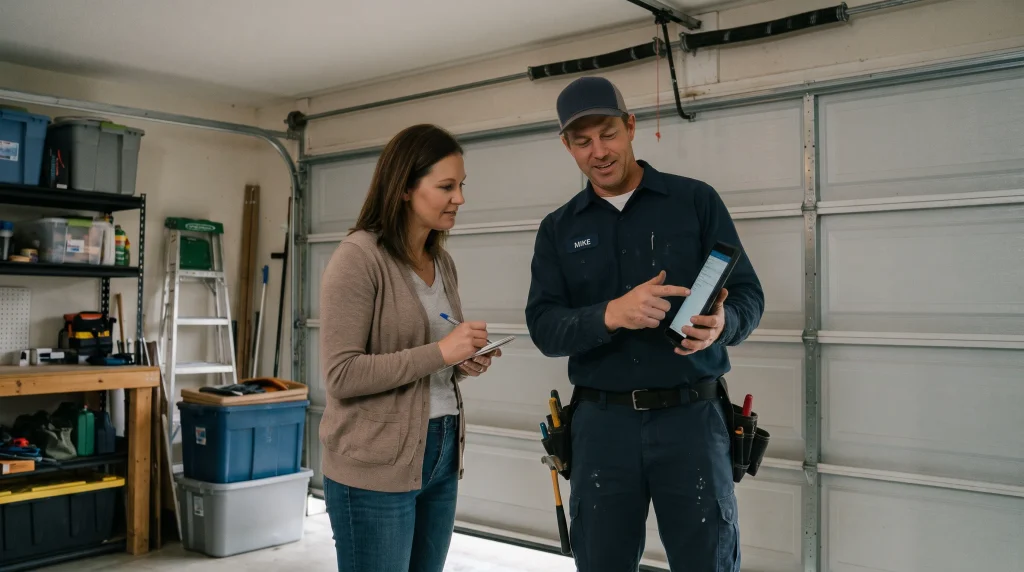
Complete estimates name the scope, parts, labor, fees, warranty, and alternatives in writing, replacing verbal promises with a document a household can rely on. Reviewing those items before approval keeps the final price aligned with the original quote and gives both sides a shared record of the work.
First Class Garage Doors prepares itemized written estimates for households across Los Angeles, CA, naming the parts, labor, fees, and warranty terms before a technician begins any work. Contact us or give us a call today, and let our team put the full repair in writing before work starts.
Frequently Asked Questions
How long does a repair estimate stay valid?
Parts prices and schedules change, so garage door repair costs quoted weeks ago may differ from current figures. Asking for the expiration date prevents surprises if approval comes after the window closes or extreme heat and other weather conditions delay the schedule.
Can the price change after work begins?
Prices can change when a broken spring turns out to have damaged cables or drums, but the technician should explain the difference and get approval first. A written change order showing the added parts or labor keeps the final repair bill consistent with what was approved.
Should a homeowner get a second opinion on an estimate?
A second estimate helps confirm that the price sits near the average cost of a garage door repair for the same issue. Asking local garage door repair companies to quote the same scope allows a fair comparison and shows which one offers the best value.
Is an on-site estimate more accurate than a phone quote?
On-site estimates rely on direct inspection of the springs, cables, tracks, and door size, which makes them more reliable than phone quotes. Phone quotes still help with early budgeting for a wooden garage door, though professional help should provide the written estimate after inspection.
What is the difference between an estimate and an invoice?
Estimates describe the planned work and expected price for the type of door before the repair, while invoices record the work completed and the amount due afterward. Repairs and any garage door replacement project follow the same sequence of estimate, approval, work, and final invoice.
Do emergency repairs come with written estimates?
Emergency service calls still allow a short written or texted estimate from the garage door service provider before work starts, even when the repair is urgent. A quick written scope and price protect the household from pressure when a broken garage door creates a security risk and urgency.
Are digital estimates as valid as paper copies?
Digital estimates sent by email or text carry the same weight as paper copies when they list the scope, price, and warranty terms. Saving the message with the date visible creates a clear record for warranty claims that depend on routine maintenance.
What if the estimate leaves out parts or fees?
Missing lines should be raised before approval, since items added later may not reflect the agreed price. Requesting a revised estimate that lists all parts and fees gives both sides a corrected document to approve.
Should a homeowner be present during the estimate?
Being present lets a household ask questions, view damaged components, and confirm the diagnosis in real time. Garage door specialists often photograph those components during inspection to document the condition of the door for later reference.


