



A garage door spring is broken when the door suddenly feels too heavy to lift, makes a loud bang, or refuses to open more than a few inches. These signs point directly to a failed spring system and require immediate attention before the problem spreads to the cables, opener, and other connected components.
Broken garage door spring repair is one of the most common service calls technicians handle, yet many homeowners do not recognize the warning signs until the door stops working completely. The signs of a failing spring are specific, identifiable, and worth knowing before the situation turns into a bigger problem.
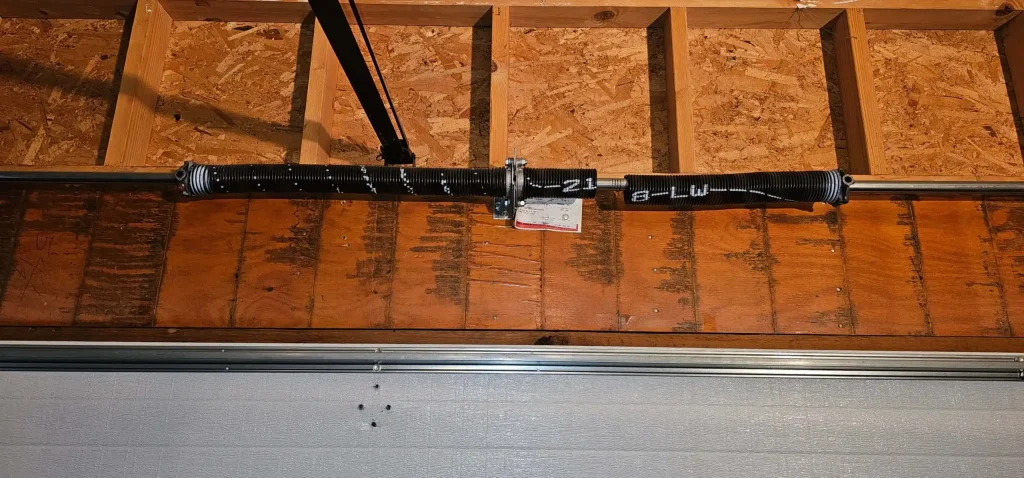
What Happens When a Garage Door Spring Breaks
When a garage door spring breaks, the entire system loses the mechanical support it depends on to move the door safely and without placing excessive strain on the opener, cables, and other connected hardware.
Here is what happens to the system when the spring fails:
- The opener motor burns out when forced to carry the door’s full weight alone.
- Lift cables lose tension and slip off the drum or tangle around the pulleys.
- A 400-pound door becomes unmanageable without a spring counterbalance.
- Modern openers shut down automatically to protect the motor.
- Tracks, rollers, and hinges wear out faster without spring force.
To understand what leads a spring to reach this point of failure, read our guide on What Causes a Broken Garage Door Spring?, which covers the most common mechanical and environmental factors behind spring failure in residential garage doors.
The Two Types of Garage Door Springs and How Each One Fails
Identifying the correct spring type is the first step in knowing where to look and what signs of failure to watch for before the system stops working.
| Torsion Spring | Extension Spring | |
| Location | Mounted above the door on a metal shaft | Runs along the horizontal tracks on each side |
| How it works | Winds tightly to store energy and release it to lift the door | Stretches and contracts as the door moves up and down |
| How it fails | Snaps under extreme tension, leaving a visible 2 to 3 inch gap in the coil | Stretches out, snaps in two, or causes cables on one side to go slack |
| Effect on the door | Affects the entire door at once | Causes one side to drop lower, creating uneven movement |
| Signs of wear | Rust, corrosion, and visible coil deformation | Stretched coils, tangled cables, and loose hardware |
Both spring types operate under immense tension and require professional handling when replacement becomes necessary.
Signs of a Broken Garage Door Spring
Visual and Audible Indicators
Physical and audible signs of a broken garage door spring are often the most immediate and unmistakable signals that the spring system has failed.
Look for these indicators:
- A loud bang signals a spring snapping under extreme tension.
- Torsion springs show a visible 2 to 3-inch gap where the coil has separated.
- Broken extension springs appear stretched, misshapen, or completely snapped.
- Lift cables hang loosely or fall away from the pulleys once tension is lost.
- Rust or visible coil deformation indicates a spring nearing full failure.
Spotting these physical signs early gives homeowners the information needed to call for garage door repair before the door is used again.
Operational Signs
Functional changes in how the door moves are often the first signals a homeowner notices before any physical damage to the spring becomes visible.
Check for these operational changes:
- Openers that hum or strain signal a loss of spring support.
- Doors that slam shut have lost the tension controlling descent speed.
- Uneven movement or binding along the track points to a broken extension spring.
- Repeated reversal cycles indicate the opener is detecting abnormal resistance.
- A door that feels impossibly heavy when operated manually confirms spring failure.
Accurately identifying these operational changes indicates a failing spring system that requires emergency garage door repair without delay.
How to Confirm a Broken Spring With the Manual Lift Test
The manual lift test is the most direct way to confirm whether a broken garage door spring is behind the door’s failure to move normally.
Here is how to perform the test correctly:
- Pull the emergency release cord to disconnect the door from the opener carriage.
- Lift the door manually to about waist height using both hands placed at the bottom.
- A door with working springs stays in place when released at waist height.
- A door that drops immediately or feels impossibly heavy confirms the spring has failed.
- Stop the test immediately if the door feels stuck or requires excessive force to move.
To walk through the risks of operating a door with a failed spring, read our guide on Can You Open a Garage Door With a Broken Spring?, which covers what homeowners need to know before attempting to move the door manually.
What to Do After Identifying a Broken Garage Door Spring
Confirming a broken garage door spring means stopping use of the door immediately to protect the opener, cables, and surrounding hardware.
Here is what to do immediately after identification:
- Stop using the opener to avoid burning out the motor under the door’s full weight.
- Leave the door in the closed position until a technician arrives.
- Avoid any DIY repair attempts on a system operating under extreme spring tension.
- Document the damage with photos to help the technician assess the situation before arriving.
- Contact a professional garage door torsion spring repair technician to restore the system safely.
Following these steps immediately keeps the repair straightforward and prevents the situation from escalating further.
Why Calling a Professional for Garage Door Spring Repair Matters
Garage door spring repair involves extreme tension and specialized tools, making professional handling the only practical option for a lasting fix.
Here is why professional service is the right call:
- Springs store hundreds of pounds of force and snap violently when mishandled.
- Winding bars and torque tools are required to safely handle spring tension.
- Professionals catch damage to cables, drums, and bearings beyond the broken spring.
- Wrong spring sizing wears out the opener and hardware faster.
- Professional repairs include a parts-and-labor warranty.
To determine whether tackling a broken garage door spring repair independently is a viable option, read our guide on Can You Fix a Broken Garage Door Spring Yourself?, which breaks down what the repair actually involves and where the risks lie.
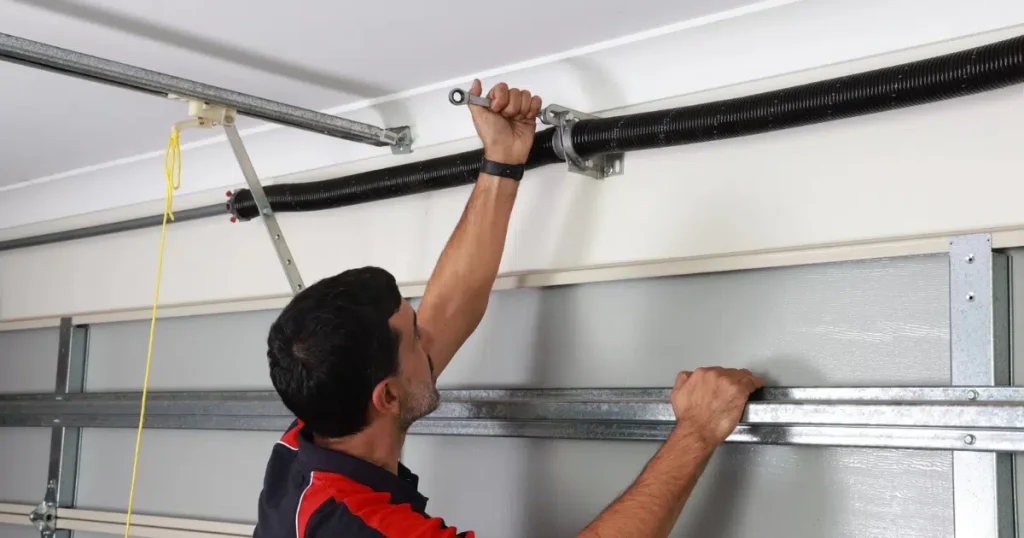
Know the Signs of a Broken Garage Door Spring Before It Stops Working
A broken garage door spring leaves behind clear signals that are easy to identify once a homeowner knows what to look for. Recognizing a loud bang, a visible coil gap, or a door that feels impossibly heavy points directly to a failed spring system that needs immediate attention.
First Class Garage Doors gives Los Angeles homeowners the expertise and hands-on diagnostic knowledge needed to accurately tell when a garage door spring is broken and what the repair requires. Contact us or give us a call today to schedule a full garage door inspection and get the problem resolved by a trained technician.
Frequently Asked Questions
How can I tell if my garage door spring is actually broken?
Listen for a loud bang coming from the garage and inspect the spring above the door for a visible gap in the coil. A door that feels extremely heavy during the manual lift test or refuses to open more than a few inches also confirms a garage door spring broken situation.
Is it safe to try to open a garage door with a broken spring?
No, operating a garage door with a broken spring forces the opener motor to carry the full weight of the door, which it is not built to handle. Without spring tension to control the descent, the door can slam shut without warning, causing serious damage to the system and anything in its path.
How much does it typically cost to replace a broken garage door spring?
The cost of garage door spring replacement varies depending on the spring type, door size, and the extent of the damage found during inspection. Torsion spring replacement typically costs more than extension spring repairs because it requires additional labor and tools.
What are the most common causes of a garage door spring breaking?
Most residential springs are rated for around 10,000 cycles, and normal wear from daily use is the leading cause of failure once that limit is reached. Rust, lack of lubrication, improper installation, and temperature fluctuations also accelerate wear and contribute to early spring failure.
Can I replace a broken garage door spring myself, or should I call a professional?
No, garage door spring replacement is not recommended as a DIY project because the springs operate under extreme tension that requires specialized tools and training to handle without causing injury. A licensed technician can complete the job correctly and ensure the replacement spring is properly sized for the door.
Where can I buy replacement garage door springs online?
Replacement springs are available from suppliers such as Amazon and Grainger, but purchasing the correct spring requires knowing the exact wire diameter, inside diameter, and length. An incorrect spring causes the door to operate improperly and wear out faster.
How do I choose the right replacement spring for my garage door?
The replacement spring must match the door's weight and size, including wire diameter, coil diameter, and overall length. A garage door technician can identify the correct specifications and source the proper garage door spring replacement for the system.
Are there any temporary fixes for a broken garage door spring?
No, there are no temporary fixes that restore the mechanical support a broken spring provides, and attempting to operate the door without it puts the opener, cables, and hardware at risk. The door should remain closed and unused until a trained technician completes a full spring replacement.
What tools do I need to replace a broken garage door spring?
Torsion spring replacement requires winding bars, a wrench set, and locking pliers to safely wind and secure the spring under tension. Extension spring replacement requires similar tools plus safety cables to control the spring during installation and prevent it from snapping loose.


