



Opening a garage door with a broken spring is possible but extremely dangerous, and in most cases, it should not be attempted without professional help. The spring carries the full weight of the door during every cycle, and without it, the door becomes an uncontrolled load that can cause injury and added repairs.
Broken garage door spring repair is the only real solution to restoring the door to normal operation and preventing the problem from getting worse. Forcing the door open before the spring is replaced risks damaging the cables, the opener, and the panels on top of the original repair.
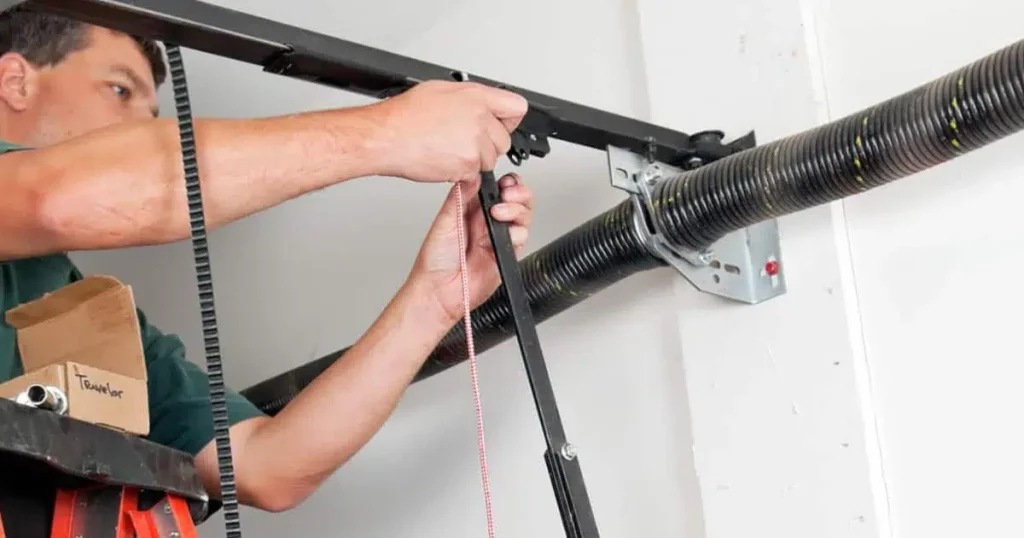
What Causes a Garage Door Spring to Break?
Garage door springs do not fail without reason, and every broken garage door spring traces back to a specific condition that built up over time before the system finally gave out without any warning.
Common causes of a broken spring include:
- Daily use eats through the spring’s rated lifespan, with most reaching their limit between seven and nine years.
- Rust and corrosion increase friction and weaken the metal coils over time.
- Springs that are never lubricated are far more likely to snap ahead of schedule.
- A spring that does not match the door’s weight accelerates coil failure.
- Repeated temperature shifts cause the metal to expand and contract, which wears the spring down.
To understand how these causes relate to what the system looks and sounds like before a full failure, read our guide on How to Tell If a Garage Door Spring Is Broken, which covers the most reliable indicators.
The Risks of Opening a Garage Door With a Broken Spring
Crashing Door Risk
Garage door springs carry the full weight of the door, and without one, nothing keeps the door in place once it leaves the ground.
Watch for these conditions before attempting to open the door:
- Doors weighing over 400 pounds drop instantly when grip is lost.
- No spring means no counterbalance holding the door at any height.
- A door left propped open without spring support can fall without warning.
- Partial opening attempts leave the door in the most unstable position possible.
- Anyone standing beneath an unsupported door faces the greatest exposure.
Door weight, loss of counterbalance, and unstable positioning all make emergency garage door repair the only responsible action after a broken garage door spring.
Physical Injury
Lifting a heavy door manually without spring assistance places the full unassisted load directly on the person attempting it.
Common injury risks include:
- Hundreds of pounds immediately strain the back, shoulders, and arms.
- Panels shift unpredictably, creating pinch points for fingers and hands.
- Uneven weight distribution forces muscle compensation, which can lead to injury.
- Losing grip mid-lift leaves no controlled way to lower the door.
- A sudden door shift can knock a person off balance entirely.
Body strain, unpredictable panel movement, and loss of grip all make manual lifting without spring support a direct risk of injury to anyone attempting it.
System Failure
A broken spring shifts its full load onto every connected component, and cables, drums, tracks, and hardware take the impact all at once.
Signs the system is failing beyond the spring include:
- Lift cables go slack or snap under unassisted door weight.
- Drums lose cable alignment, causing uneven door travel.
- Lateral pressure bends the garage door track out of alignment.
- Hinges and rollers wear down faster without a spring counterbalance.
- Hardware can fail within a single forced cycle.
Cable slack, drum misalignment, and track pressure all indicate that forcing the door compounds the damage well beyond the spring itself.
Burned Out Opener Motor
Garage door openers are built to move a spring-assisted door, and the moment the spring is gone, the motor takes on a load it was never rated for.
What happens to the opener when the spring is broken:
- Motors strain immediately under the full unassisted door weight.
- Internal gears strip under load levels that the opener cannot handle.
- Belt and chain drive systems snap under a single forced cycle.
- Repeated activation attempts significantly accelerate motor burnout.
- Openers that burn out due to overload require a full unit replacement.
Motor strain, gear stripping, and drive system failure all result from running an automatic opener against a door that the spring was supposed to be supporting.
Damaged Door Panels
Forcing a door open without spring support applies an uneven lifting force directly to the panels with every attempt.
What panel damage looks like after a forced opening attempt:
- Metal panels bend along the seams where uneven force concentrates.
- Bottom panels are typically the first to show visible deformation.
- Gaps appear between sections when the door is forced past resistance.
- Paint cracks expose the metal underneath to moisture and rust.
- Panel misalignment prevents the door from sealing properly when closed.
Uneven force, seam stress, and panel misalignment are the most common reasons garage door panel repair follows a broken spring incident.
How to Tell If a Garage Door Spring Is Broken Before Touching It
Confirming a garage door spring broken situation from a distance keeps everyone away from a system that is still under extreme tension.
Common signs to look for include:
- A loud bang from the garage signals a torsion spring snapping under pressure.
- Visible gaps in the spring coil above the door confirm a clean break.
- The door lifts only a few inches before the opener stops detecting resistance.
- The door feels like a dead weight when tested manually without opener assistance.
- Cables hanging loose along the sides of the door indicate the spring is no longer holding tension.
To understand what specific conditions lead to these signs, read our guide on What Causes a Broken Garage Door Spring?, which covers the most common factors behind spring failure in residential garage doors.
What to Do Instead of Opening a Garage Door With a Broken Spring
A garage door spring broken situation requires immediate action to protect the door, the opener, and everyone in the household.
The right steps to take include:
- Keep the door fully closed to prevent uneven stress on the cables and hardware.
- Unplug the automatic opener to stop accidental activation attempts.
- Avoid DIY repairs on a spring system operating under immense tension.
- Use an alternate entry point until a garage door technician completes the repair.
- Call a garage door spring repair professional as soon as the problem is confirmed.
Taking these steps immediately narrows the window for further damage and prevents the situation from escalating before professional help arrives.
How to Open a Garage Door With a Broken Spring in an Emergency
Opening a garage door with a broken spring should only happen when no other option exists, and two people are required before attempting anything.
Steps to follow in an emergency include:
- Pull the emergency release cord to disconnect the door from the automatic opener.
- Unplug the opener before pulling the cord to prevent accidental activation.
- Position one person on each side and lift slowly from the bottom panel.
- Never rely on a person to hold the door open while someone passes beneath it.
- Use a sturdy prop on the track to secure the door before anyone moves underneath.
Following each step in order is the only way to move through this process without putting people or the door at greater risk.
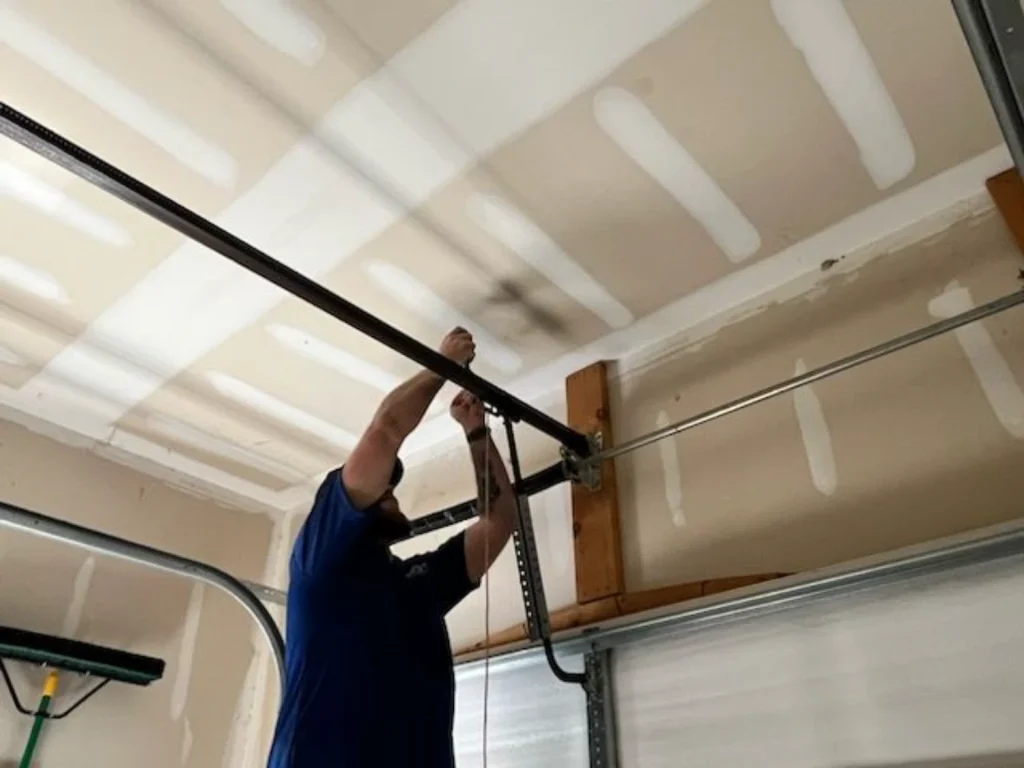
How a Professional Fixes a Broken Garage Door Spring
Professional garage door spring replacement goes beyond the spring itself to restore the full system to proper working condition.
What a professional garage door technician does during a repair visit:
- Inspects the spring system, cables, drums, and hardware for wear or damage.
- Measures the door’s weight and height to select the right spring type for the door.
- Replaces torsion spring or garage door extension spring based on the existing setup.
- Adjusts spring tension and set screws to restore proper balance.
- Runs the opener through full cycles to confirm smooth operation.
To get a full picture of what garage door spring replacement actually involves, read our guide on Can You Fix a Broken Garage Door Spring Yourself?, which walks through the complete process and the risks of attempting it without professional training.
Never Force Open a Garage Door With a Broken Spring
A broken garage door spring puts the entire system at risk the moment any attempt is made to force the door open, and the damage compounds with each forced cycle. Calling a professional immediately is the only way to protect the cables, the opener, the panels, and everyone around the door.
First Class Garage Doors brings years of hands-on experience to every garage door spring repair and replacement job across Los Angeles, delivering accurate diagnostics and quality repairs on every visit. Contact us or give us a call today, and let our team get the door working properly again.
Frequently Asked Questions
Will a garage door opener attempt to run with a broken spring?
Yes, but the motor immediately takes on the full unassisted weight of the door the moment it activates. Most modern openers detect abnormal resistance and shut down the cycle before completing a full opening, but repeated attempts can burn out the motor regardless of the safety stop.
How many people does it take to manually open a garage door with a broken spring?
At a minimum, two people are needed before attempting a manual opening in an emergency, and even that carries significant risk. One person on each side distributes the weight more evenly, but the door remains unstable without spring support throughout the entire process.
Can forcing a garage door open with a broken spring void the opener's warranty?
Yes, most manufacturers consider spring-related motor overload a form of misuse that falls outside normal operating conditions. Running the opener against the full unassisted door weight gives manufacturers grounds to deny warranty coverage on the motor and internal components.
What is the difference between a torsion spring and an extension spring on a garage door?
A torsion spring mounts horizontally above the door and stores energy by twisting along a metal shaft during operation. A garage door extension spring runs along the horizontal tracks on each side of the door and works by stretching and contracting as the door opens and closes.
How long does garage door spring replacement typically take?
Garage door spring replacement is typically completed within one to two hours by a trained technician with the right tools and parts on hand. The time may vary depending on the spring type, the condition of the surrounding hardware, and whether additional components need attention during the visit.
Can a single broken spring affect how the garage door opens on both sides?
Yes, a single broken torsion spring affects the entire door because one spring controls the balance across the system's full width. The door will feel noticeably heavier on one side and travel unevenly during operation, putting additional strain on the cables and tracks.
How do technicians test a garage door after fixing a broken spring?
Technicians disconnect the opener and lift the door manually to the midpoint to perform a balance test. A properly repaired door holds its position at that height without assistance, and the technician runs the opener through several full cycles before confirming the repair is complete.
Is it normal for a garage door to make noise after a spring breaks?
Yes, scraping, grinding, or popping sounds after a spring breaks indicate that cables, drums, or tracks are absorbing uneven stress from the missing spring support. Continuing to operate the door under these conditions accelerates wear across the entire system and increases the likelihood of additional component failures.
Can a garage door be secured from the inside when the spring is broken?
Yes, most garage doors have a manual lock on the inside that secures the door firmly in the closed position until the spring is repaired. Engaging it prevents the door from being opened from the outside and keeps the system stable while waiting for a technician to arrive.


