



A garage door spring breaks due to a combination of factors, including normal wear and tear, rust buildup, lack of maintenance, temperature fluctuations, and poor-quality or improperly sized springs. Each of those causes follows a different pattern, and understanding which one is at play makes it possible to address the actual problem.
Identifying the root cause is what separates a proper broken garage door spring repair from a temporary fix that leads to the same breakdown months down the road. Knowing what weakened the spring in the first place gives homeowners the information needed to protect the entire garage door system from facing the same failure again.
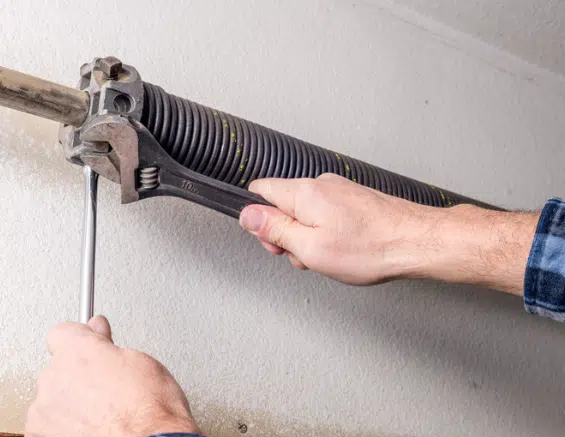
What Are Garage Door Springs and How Do They Work?
Garage door springs are mechanical components that counterbalance the door’s full weight with each cycle, allowing the opener, cables, and surrounding hardware to function without excessive strain.
| Feature | Torsion Spring | Extension Spring |
| Mount Location | Above the door opening | Along the horizontal tracks on each side |
| How It Works | Twists to store and release energy | Stretches to generate lifting force |
| Durability | Generally longer-lasting | Shorter lifespan under heavy use |
| Cycle Rating | Up to 20,000+ cycles with high-cycle models | Typically rated for 10,000 cycles |
| Common Use | Most modern residential garage doors | Older or lighter residential doors |
To recognize when a spring has already failed, read our guide on How to Tell If a Garage Door Spring Is Broken, which covers the most reliable indicators of a spring that has reached the end of its service life.
What Causes a Broken Garage Door Spring?
Normal Wear and Tear Over Time
Every garage door spring has a finite cycle rating, and once that limit is reached, the metal has no capacity left to absorb the stress of daily operation.
Watch for these wear patterns:
- Standard springs handle around 10,000 cycles before metal fatigue sets in
- One cycle equals one full open and one full close
- High-use homes exhaust a standard spring much faster than low-use households
- High-cycle springs rated for 20,000-plus cycles offer a longer service life
- Oil-tempered steel holds up better under repeated stress than untreated alternatives
Cycle count, material grade, and daily usage all determine how quickly a spring reaches the point where it needs garage door torsion spring repair.
Rust and Corrosion Buildup
Rust compromises the structural integrity of a garage door spring long before a visible break appears on the coil.
Look out for these corrosion indicators:
- Moisture on unlubricated coils starts an oxidation process that eats into the metal
- Rust between coils grinds down the steel with every movement
- Corroded coils become brittle and lose tensile strength under tension
- Coastal Los Angeles humidity accelerates rust deterioration on spring coils
- Visible rust on dry coils confirms long-term lubrication neglect
Lubrication frequency, garage environment, and coastal exposure all determine how quickly rust moves through a spring’s coil structure.
Lack of Maintenance
Skipping annual garage door service allows small mechanical issues to compound into failures that affect the entire spring system.
Maintenance gaps that accelerate spring wear include:
- Unlubricated coils develop friction that wears down the steel faster
- Tension imbalance builds without periodic adjustments, stressing the spring unevenly
- Debris on the coils traps moisture and accelerates rust between service visits
- Frayed cables and worn rollers add indirect strain to the spring each cycle
- Unaddressed hardware issues force the spring to compensate for imbalances it was never built to handle
Regular garage door maintenance is what keeps small wear patterns from reaching the point of full spring failure.
Extreme Temperature Fluctuations
Repeated expansion and contraction due to daily temperature fluctuations create internal stress that weakens the spring’s structure over time.
Temperature-related stress factors include:
- Los Angeles afternoons expand the coils while cooler evenings contract them
- Repeated thermal cycling creates microscopic stress fractures in the coil structure
- Fractures grow with each shift and reduce the spring’s load-bearing capacity
- Seasonal transitions are when temperature-driven failures occur most frequently
- Higher-grade steel handles thermal stress better than low-cost alternatives
Daily temperature range, material grade, and cycle frequency all influence how quickly thermal stress translates into spring failure.
Overloading the Door
Adding weight to a garage door without recalibrating the spring puts the system under constant strain, which it was never designed to withstand.
Common overloading scenarios include:
- Insulated panel upgrades increase door weight without adjusting spring tension
- Decorative hardware adds cumulative load across thousands of cycles
- Switching to a heavier door without replacing the springs creates an immediate load mismatch
- A spring lifting beyond its rated capacity wears out faster than one properly matched to the door
- An overloaded spring forces the opener motor to work harder on every cycle
Door weight, spring rating, and hardware additions all factor into how long a spring lasts before a load imbalance causes it to fail.
Poor-Quality or Improperly Sized Springs
Spring quality and sizing determine how long the component lasts and how safely the door operates from the moment of installation.
Key quality and sizing factors include:
- Thicker wire gauge holds up better under repeated mechanical stress
- Oil-tempered and galvanized steel resists wear and corrosion better than untreated steel
- A spring too light for the door weight runs under constant excessive tension
- Improperly tensioned springs create uneven movement and accelerate one-sided wear
- Cheap replacement springs fail well before a properly graded spring would
Substandard garage door spring installation is what causes a spring to fall short of its rated cycle life from the start.
What Happens When a Garage Door Spring Breaks?
A broken garage door spring removes the counterbalance that the entire system depends on, putting immediate strain on every connected component.
Here is what happens when the spring fails:
- The door becomes too heavy for the opener to lift without overloading the motor
- Lift cables lose tension and slip off the drum or go slack along the track
- The opener detects abnormal resistance and stops the cycle to protect the motor
- Surrounding hardware, including rollers, hinges, and drums, absorbs uneven stress
- Continued operation without a working spring accelerates wear across the entire system
Identifying what the spring failure affected beyond the spring itself is what determines the full scope of repairs needed
How to Identify the Cause Behind a Broken Garage Door Spring
Pinpointing the cause behind a broken garage door spring requires a focused visual assessment of the spring, hardware, and the door’s operational history.
Here is what to check:
- Visible gaps in the coils point to metal fatigue from cycle exhaustion
- Rust on the coils confirms moisture exposure and lubrication neglect
- Loose or fallen cables suggest the spring released tension suddenly
- Recent door modifications indicate a possible overload on the spring
- Early failure before the expected lifespan points to incorrect sizing or poor material grade
To confirm whether the door can still be operated safely after a spring failure, read our guide on Can You Open a Garage Door With a Broken Spring?, which walks through the risks and steps involved in moving the door before a repair is made.
How to Confirm a Broken Garage Door Spring Cause
Confirming the exact cause of a broken garage door spring requires a structured assessment that goes beyond what a basic visual check can reveal.
Here is how professionals confirm the cause:
- Manually lifting the door reveals whether the spring is still providing counterbalance
- Measuring the wire diameter and the inside diameter confirms whether the spring was correctly sized
- Checking cables and drums identifies secondary damage from the spring failure
- Reviewing the door’s age and service records narrows down the most likely cause
- Testing the opener’s force settings confirms whether the motor sustained damage
A garage door technician uses these findings to determine the correct repair approach and prevent the same failure from recurring.
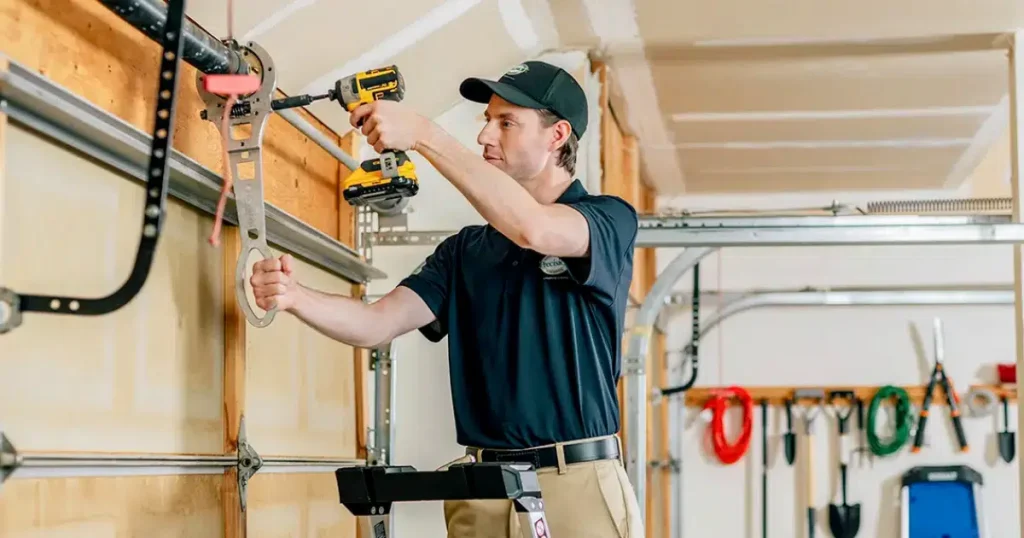
Why Garage Door Spring Repair and Replacement Requires a Professional
Garage door spring repair and replacement involve levels of tension and precision that make professional service the only responsible option.
Here is why professional service is required:
- Springs store hundreds of pounds of force that release violently if mishandled
- Correct sizing requires matching wire diameter, wind count, and door weight
- Torsion spring replacement requires calibrated winding bars
- Extension springs must be fitted with safety cables after installation
- Incorrect installation creates an unsafe operating condition from the first cycle
To weigh the risks of attempting this repair without professional help, read our guide on Can You Fix a Broken Garage Door Spring Yourself?, which covers why DIY attempts on spring repairs consistently lead to injury and additional damage.
Stop Guessing What Caused Your Garage Door Spring to Break
Every broken garage door spring has a root cause, and identifying that cause is what determines whether the next spring lasts its full rated life or fails ahead of schedule. Wear patterns, rust, temperature stress, overloading, and poor installation all leave behind evidence that a trained technician can assess and correct.
First Class Garage Doors has the tools, training, and years of experience needed to diagnose the causes of garage door spring failure throughout Los Angeles, CA. Contact us or give us a call today, and let our team inspect your system and address the root cause before it completely takes the door out of service.
Frequently Asked Questions
Can a garage door spring break without any warning signs?
Yes, a spring can break suddenly without obvious warning, especially when metal fatigue has been building silently over thousands of cycles. Scheduling annual inspections is the most reliable way to catch a spring nearing the end of its cycle life before it fails completely.
Does the weight of the garage door affect how long the spring lasts?
Yes, a heavier door places greater demand on the spring with each cycle, accelerating wear and shortening the spring's rated service life. A spring that is not correctly matched to the door weight will reach the point of garage door spring replacement much sooner than one that is properly sized.
Can both garage door springs break from the same cause?
Yes, both springs typically undergo the same number of cycles and are exposed to the same environmental conditions, so they tend to fail at about the same time. When one spring breaks, the other is usually close behind and should be inspected immediately.
Does a poorly installed spring cause more damage to the garage door system?
Yes, a spring that is incorrectly tensioned or improperly sized places uneven stress on the cables, drums, rollers, and opener from the first cycle. That added strain causes premature wear across every connected component and increases the likelihood of a secondary hardware failure.
How does the quality of the garage door spring affect how long it lasts?
Higher-grade springs made from oil-tempered or galvanized steel handle repeated mechanical stress and corrosion far better than standard untreated steel. Investing in a quality spring during garage door spring replacement directly extends the service life of the entire system.
Can a garage door spring break because of how the door is used?
Yes, habits like manually forcing the door, blocking the sensors to override the opener, or frequently interrupting cycles mid-travel all add irregular stress to the spring. Consistent and proper use of the garage door reduces the rate at which the spring accumulates mechanical wear.
Is a garage door spring broken if the door only opens partially?
Not always, but a door that stops partway through a cycle is a strong indicator that the spring has lost tension or has partially failed. A professional inspection is the only reliable way to confirm whether a garage door spring broken situation is behind the partial movement.
Does lubricating garage door springs actually extend their lifespan?
Yes, applying a silicone-based lubricant to the springs reduces friction between the coils and creates a moisture barrier that slows rust formation. Regular lubrication is one of the simplest and most cost-effective ways to extend spring life between professional service visits.
Can the garage door opener cause the spring to break faster?
Yes, an automatic opener set with too much force, or one that is malfunctioning, places extra mechanical stress on the spring during every cycle. Keeping the opener properly calibrated reduces the amount of strain transferred to the spring during normal operation.


