



Frequent use without lubrication, extreme temperature changes, excess door weight, and debris buildup wear down rollers over time, eventually requiring garage door roller replacement. Different causes wear rollers differently, though the result usually looks the same: a door that no longer moves smoothly.
Understanding which cause applies to a specific door helps a homeowner choose the right replacement roller instead of repeating the same mistake. This guide breaks down each cause in detail, along with what a professional technician looks for when confirming the actual source of the problem.
Key Takeaways
- Frequent use without lubrication speeds up wear across every roller material.
- Extreme temperature swings cause certain roller materials to crack or warp.
- Heavier residential doors place added strain on rollers not built for them.
- Debris and dust inside the tracks accelerate wear on the roller surface.
- A professional inspection confirms the exact cause before replacement begins.
Common Causes of Garage Door Roller Wear
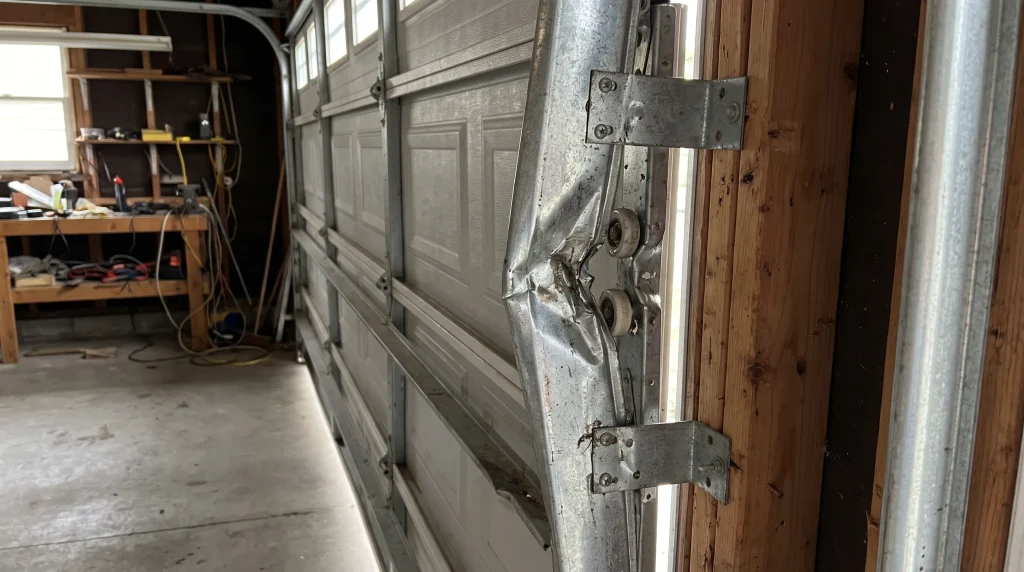
Roller wear develops through a specific combination of mechanical stress, environmental exposure, and maintenance habits over time.
| Cause | What It Does | Effect on Rollers |
| Frequent Use | Repeated opening and closing without lubrication | Increased friction and faster surface wear |
| Temperature Swings | Extreme heat or cold affects certain materials | Cracking, warping, or brittleness over time |
| Excess Door Weight | Heavier doors place added strain on rollers | Accelerated wear on rollers not built for the load |
| Debris in Tracks | Dust and dirt accumulate inside the metal tracks | Increased grinding and uneven roller movement |
| Track Misalignment | Tracks shift out of proper position over time | Rollers forced to grind rather than roll smoothly |
To identify how these effects typically show up in daily use before a full failure occurs, read our guide on Signs Garage Door Rollers Need Replacement, which walks through each visible symptom in specific detail.
Frequent Use Without Lubrication
Daily use without proper lubrication is one of the fastest ways to wear down any roller material, regardless of type, grade, or overall door weight.
Watch for these specific patterns tied to frequent use:
- Multiple daily cycles increase friction between the roller and the track.
- Dry rollers grind audibly during opening and closing without lubrication.
- Busy households wear down rollers faster than occasional weekend use.
- Automatic openers cycle the door more often than manual operation alone.
- Missed lubrication schedules allow friction to build up gradually over time.
Keeping up with garage door maintenance on a consistent schedule remains the simplest way to slow this specific type of wear before it worsens.
Extreme Temperature Changes
Extreme heat or cold affects certain roller materials more severely than others, particularly plastic and lower-grade steel options.
Look for these temperature-related wear patterns:
- Plastic rollers become brittle and prone to cracking in cold weather.
- Intense summer heat softens certain materials, increasing wear over time.
- Rapid seasonal swings repeatedly stress the roller material.
- Steel rollers without ball bearings corrode faster in humid climates.
- Garages without climate control experience these effects more directly.
Nylon rollers with sealed ball bearings generally resist temperature-related wear better than plastic or unprotected steel alternatives.
Excess Weight From a Heavier Door
A heavier residential door places consistent strain on rollers not originally designed to support that additional load over time.
These weight-related factors accelerate roller wear:
- Insulated doors weigh noticeably more than standard, non-insulated panels.
- Rollers rated for lighter doors wear out faster under added weight.
- The spring system compensates for weight, though rollers absorb daily strain.
- Upgrading to a heavier door without upgrading rollers accelerates wear.
- Track alignment becomes more critical as the total door weight increases.
To determine how a heavier door affects the overall replacement timeline, read our guide on How Often to Replace Garage Door Rollers, which breaks down expected lifespan by roller type and door weight.
Dust and Debris in the Tracks
Dust, dirt, and small debris gradually accumulate inside the metal tracks over time, increasing friction with nearly every cycle the door completes.
These debris-related issues commonly contribute to roller wear:
- Outdoor dust settles into the tracks more in dry, windy climates.
- Debris buildup forces rollers to grind rather than roll smoothly.
- Infrequent cleaning allows small particles to accumulate unnoticed over time.
- Debris trapped near the bearings accelerates internal wear considerably.
- Garages near construction or landscaping work experience faster buildup.
Clearing the tracks and scheduling garage door off track repair early often prevents debris-related wear from worsening into a larger issue.
Misaligned or Damaged Metal Tracks
Metal tracks that shift out of proper alignment force rollers to grind against an uneven surface instead of moving smoothly.
These alignment issues frequently accelerate roller wear:
- Loose track brackets allow the tracks to shift gradually over time.
- Impact damage, such as a vehicle bump, misaligns the track instantly.
- Warped tracks create uneven pressure points along the roller’s path.
- Corrosion on the tracks creates rough patches that increase friction.
- Poor original installation sometimes leaves tracks slightly misaligned from the start.
Correcting track alignment early often extends the lifespan of the new rollers installed afterward, while also reducing strain on the opener system.
How a Technician Confirms the Exact Cause
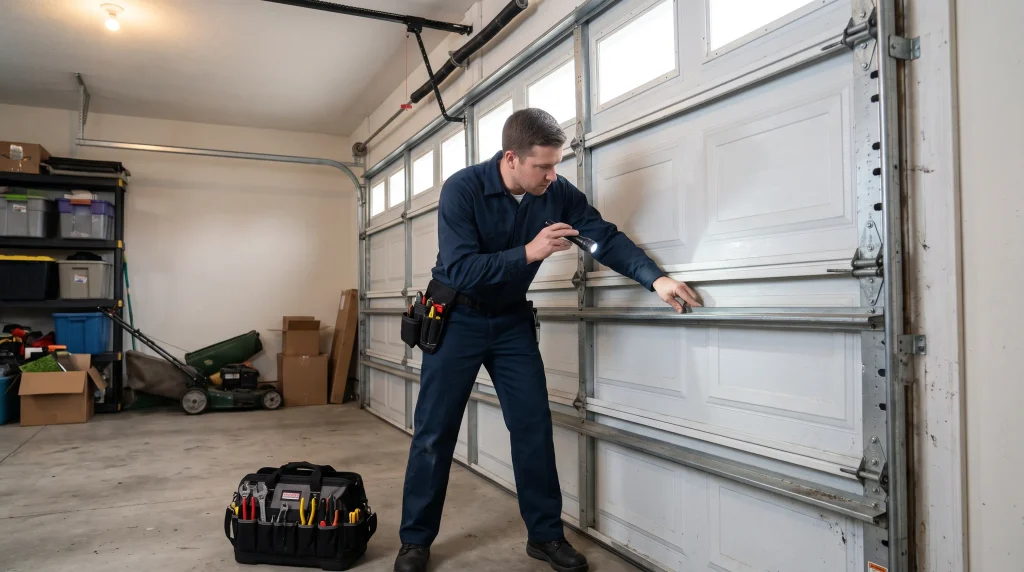
A professional technician follows a specific inspection process to determine which cause is actually responsible for the roller wear.
The typical diagnostic process includes these specific steps:
- The tracks get inspected first for visible misalignment or damage.
- Roller material and wear patterns are compared against the expected lifespan.
- Lubrication history gets reviewed to rule out simple maintenance gaps.
- Door weight gets checked against the roller’s original weight rating.
- Garage door roller repair gets recommended once the specific cause is confirmed.
To walk through the maintenance routine that follows once replacement is complete, read our guide on How to Care for Garage Door Rollers After Replacement, which covers the habits that protect new rollers long term.
Knowing the Cause Prevents the Same Problem Twice
Roller wear traces back to a specific, identifiable cause in nearly every case, whether it involves frequent use, temperature exposure, added weight, or track condition. Addressing the actual cause, instead of only replacing the roller, prevents the same problem from returning quickly.
First Class Garage Doors identifies the exact cause behind roller wear for homeowners throughout Los Angeles, CA, before recommending any replacement or repair work. Contact us or give us a call today, and let our team confirm the cause and resolve it correctly the first time.
Frequently Asked Questions
Does the type of roller affect how much these causes matter?
Higher-grade rollers, such as nylon garage door rollers with sealed ball bearings, resist these causes more effectively than plastic or unsealed steel alternatives. Choosing a higher-quality roller reduces the impact of frequent use, temperature swings, and debris exposure on your rollers' lifespan.
How long does it take for debris buildup to affect roller performance?
Debris buildup typically affects performance gradually, often over a couple of years, depending on the garage's exposure to dust and outdoor conditions. Regular lubrication and track cleaning slow this process considerably compared to infrequent maintenance.
Is track misalignment always caused by roller wear?
Track misalignment can result from roller wear, but impact damage or a poor original installation can also cause misalignment. A professional garage door technician determines which factor came first during a thorough inspection.
Can a homeowner check for these causes without professional help?
A homeowner can visually check for debris, obvious track damage, or unusual noise before scheduling a professional inspection. However, confirming the exact cause typically requires a trained technician's evaluation.
Does upgrading to a heavier door always require new rollers?
Upgrading to a new garage door often requires rollers rated for the additional weight, since the original rollers may not support the new load. A professional installer confirms the correct roller rating during the upgrade process.
Why do rollers near coastal areas seem to wear out faster?
Coastal climates combine humidity and salt exposure, both of which accelerate corrosion on steel rollers without protective coatings, leading to visible damage sooner. Sealed nylon rollers generally hold up better than steel in these specific environmental conditions.
Can extreme cold cause sudden roller failure instead of gradual wear?
Extreme cold can occasionally cause sudden cracking in already-brittle plastic rollers, though most failures still develop gradually rather than all at once. A roller already showing minor signs of wear is more likely to fail suddenly during a cold snap.
Does the garage door opener contribute to any of these causes?
The garage door opener itself does not directly cause roller wear, though a malfunctioning opener can increase the number of cycles the rollers endure. Addressing opener issues alongside roller wear often prevents further damage to the overall garage door system.
How does a technician confirm debris is the primary cause?
A garage door professional typically inspects the tracks directly for visible buildup and tests roller movement before and after cleaning the affected area. Improved movement after cleaning strongly suggests debris was the primary cause.


