



A garage door leaves its track when the components that hold it in place can no longer do their job, and that breakdown can come from a single failed part or a combination of issues that built up over time. What looks like a sudden problem on the surface is usually the result of something that has been developing for much longer.
Identifying the exact cause is what makes the difference between a proper garage door off track repair and a temporary fix that fails again weeks later. Knowing what to look for and why it happens gives homeowners the clarity they need to make informed decisions about how to move forward with the right repair.
Is It Dangerous to Have a Garage Door Off Track?
Yes, it is, and a garage door off track is a serious safety hazard that can cause the door to collapse without warning, damage surrounding components, and put everyone near it at risk of injury.
Here is why an off track garage door is considered a real safety hazard:
- The door can fall without warning once it loses its track support
- The garage door opener motor strains and can burn out from the misaligned load
- Cables, springs, and rollers take on accelerated damage with every forced movement
- An unsecured door leaves your home exposed to outside elements and intruders
- Everyone near the door, including family members, pets, and parked vehicles, is at risk
To understand the full extent of what an off track door can do to your home and the people in it, read our guide on Is a Garage Door Off Track Dangerous?, which covers the specific risks homeowners need to know before they attempt anything on their own.
Warning Signs Your Garage Door Has Come Off Track
Knowing the warning signs of a garage door off track problem early gives you the chance to act before the damage spreads to other parts of the system.
Here are the most common warning signs to watch for:
- A grinding noise is coming from the tracks while the door moves up or down
- One side of the door appears higher or lower than the other during operation
- The door moves more slowly than usual or hesitates at certain points along the track
- Visible gaps between the rollers and the edge of the metal tracks when the door is closed
- The door shakes or wobbles excessively instead of traveling in a smooth, straight line
To catch these warning signs before they turn into a full derailment, read our guide on Warning Signs Your Garage Door Is Off Track, which walks through each indicator in detail so you know exactly what to look for and when to call for help.
Common Reasons a Garage Door Goes Off Track
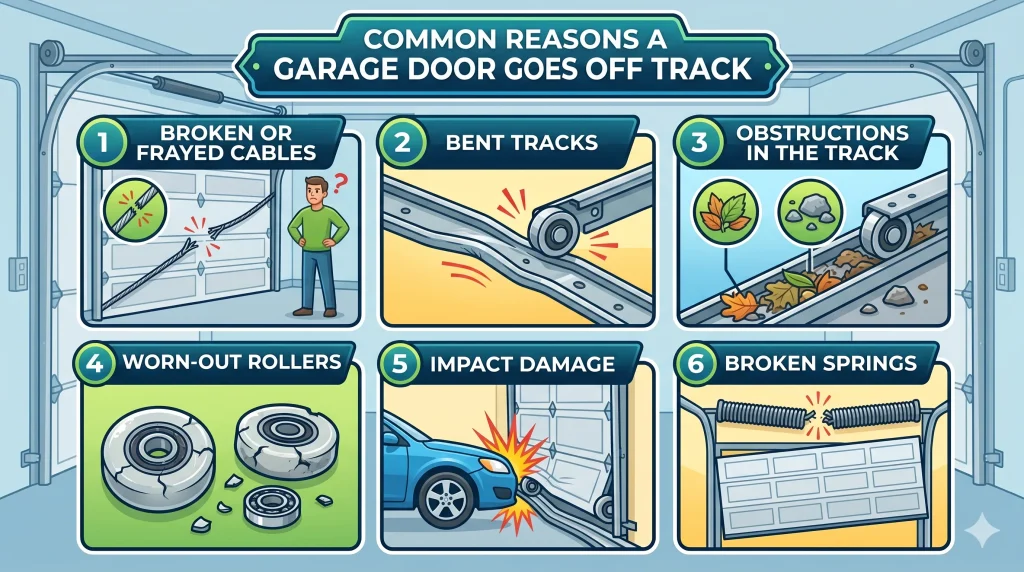
Broken or Frayed Cables
Lift cables carry equal tension on both sides of the door, and when one snaps or frays, that balance is lost immediately.
Watch for these signs of a broken cable:
- One side of the door rises higher than the other during operation
- Frayed or kinked cable visible along the side of the door
- Cables appear slack or hanging loose near the bottom bracket
- The door feels heavier than usual when operated manually
Promptgarage door cable repair is the only way to restore that balance before the rollers are pulled completely out of the track.
Bent Tracks
Metal tracks guide the rollers from the floor to the ceiling, and even a small bend disrupts that path entirely.
Here is what bent tracks typically look like:
- Visible kinks or curves along the vertical or horizontal track
- Rollers skip or grind at the same spot every time
- The gap between the roller and the track wall widens in one area
- Door stops or hesitates at a consistent point during travel
Bent tracks redirect the rollers away from their intended path, and the garage door off track result is almost always unavoidable once that misalignment takes hold.
Obstructions in the Track
Debris inside the track blocks the smooth path the rollers need to complete each full cycle.
Common obstructions found inside garage door tracks include:
- Built-up dirt and grime hardened along the track interior
- Small rocks, leaves, or debris are lodged in the track opening
- Loose bolts or hardware fragments that have dropped into the track
- Stored items are pressing against the door and into the track wall
Keeping the track clean and free of debris is one of the most practical ways to maintain smooth operation and prevent an unexpected derailment.
Worn-Out Rollers
Garage door rollers stay in constant contact with the metal tracks, and that friction adds up over years of daily use.
Look for these signs of wear on your rollers:
- Cracked, chipped, or visibly out-of-round roller surface
- Wobbling or shaking during door travel instead of smooth rolling
- Roller stem bent or no longer centered in the bracket
- Flat spots on nylon rollers from prolonged track contact
Once that contact breaks down,garage door roller repair becomes necessary to restore proper alignment and keep the door from slipping off track during normal operation.
Impact Damage
Accidental impact transfers force directly into the tracks, panels, and rollers in ways that are not always visible right away.
Signs that impact damage has affected the track system include:
- Visible dents or creases on the door panels near the track
- The track pulled away from the wall or mounting bracket, bent outward
- Rollers visibly pushed out of position on the affected side
- The door binds or catches at the exact point where the impact occurred
Even a minor accidental impact from a vehicle or heavy object can misalign the tracks enough to cause a full derailment.
Broken Springs
Garage door springs carry the full counterbalance load of the door, and when one breaks, that load shifts in ways the rest of the system cannot handle.
Broken spring indicators that often lead to a garage door off track situation include:
- A loud bang was heard from the garage, often mistaken for something falling
- The door drops suddenly on one side or refuses to stay open
- Visible gap in the torsion spring coil above the door
- Garage door opener strains loudly but fails to complete the cycle
Broken springs place the entire system under extreme tension, and the door will act erratically until the problem is properly addressed by a professional.
Factors That Contribute to a Garage Door Going Off Track
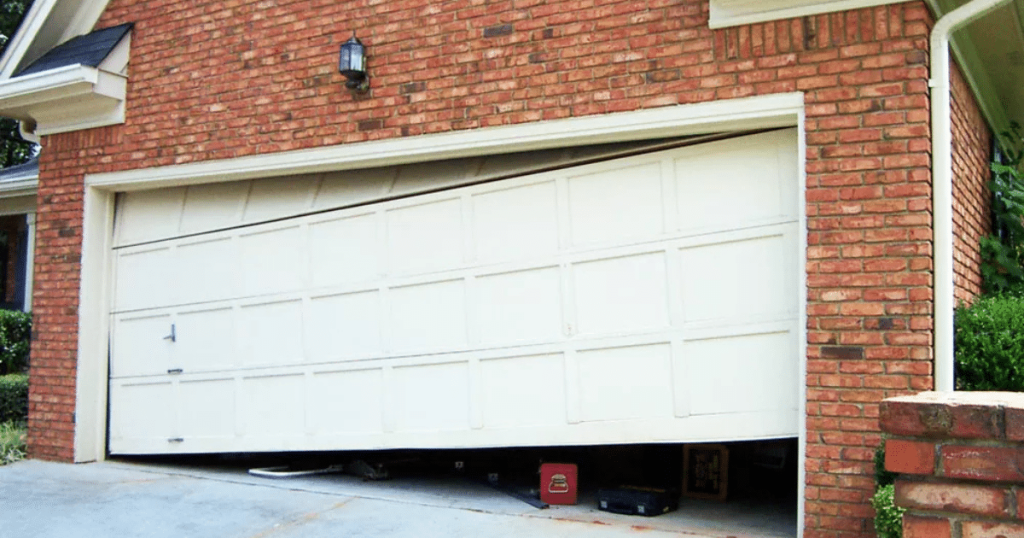
Several underlying conditions make a garage door more vulnerable to coming off track, and most of them develop gradually before any visible problem appears.
Here are the key factors that contribute to a garage door going off track:
- Age and daily wear on rollers, cables, springs, and mounting brackets
- Lack of regular maintenance allows loose hardware to worsen undetected
- Poor initial installation, leaving tracks misaligned from day one
- High frequency of daily use breaks down moving parts faster
- Temperature fluctuations are causing metal tracks to shift out of alignment
These factors rarely cause a derailment on their own, but when two or more are present at the same time, the need forgarage door repair becomes unavoidable.
What Happens If You Ignore a Garage Door Off Track Problem?
Leaving a garage door off track unaddressed puts every connected component under increasing stress with each passing day.
Here is what happens when the problem is ignored:
- The door can fall without warning and cause serious injury or property damage
- The garage door opener motor burns out from repeatedly straining against a misaligned load
- Cables, springs, and rollers sustain further damage from the uneven weight distribution
- Mounting brackets loosen and pull away from the wall under the added stress
- The entire garage door system deteriorates faster than it normally would
Ignoring a garage door off track problem never makes it smaller, and every day without a repair adds more components to the list that need professional attention.
What to Do When Your Garage Door Goes Off Track
Knowing the right steps to take immediately after a garage door goes off track can prevent additional damage to the system and reduce the risk of injury.
Here is what to do when your garage door goes off track:
- Stop operating the door immediately, and do not press the opener button again
- Pull the emergency release cord to disconnect the garage door opener and prevent accidental activation
- Do a visual check of the tracks, rollers, and cables without touching any components
- Note what looks visibly wrong so the garage door technician has a clear picture before arriving
- Avoid any DIY fix attempt until a professional has assessed the full extent of the damage
Taking these steps right away protects both the people in your home and the components that are still in good condition.
Should You Call a Professional for Garage Door Off Track Repair?
Most garage door off track situations involve components under extreme tension that require proper tools and training to handle correctly.
Here are the signs that it is time to call a professional:
- Tracks are visibly bent, pulled away from the wall, or misaligned
- Cables are frayed, slack, or completely snapped on one side
- Springs are broken, or the door drops unevenly during operation
- The garage door opener runs, but the door refuses to move or complete a cycle
- Any garage door off track adjustment attempted without professional tools made the problem worse
To get a full walkthrough of the repair process, read our guide on How to Fix a Garage Door Off Track, which details every step a trained technician takes to restore the door to proper working condition.
How to Prevent Your Garage Door From Going Off Track
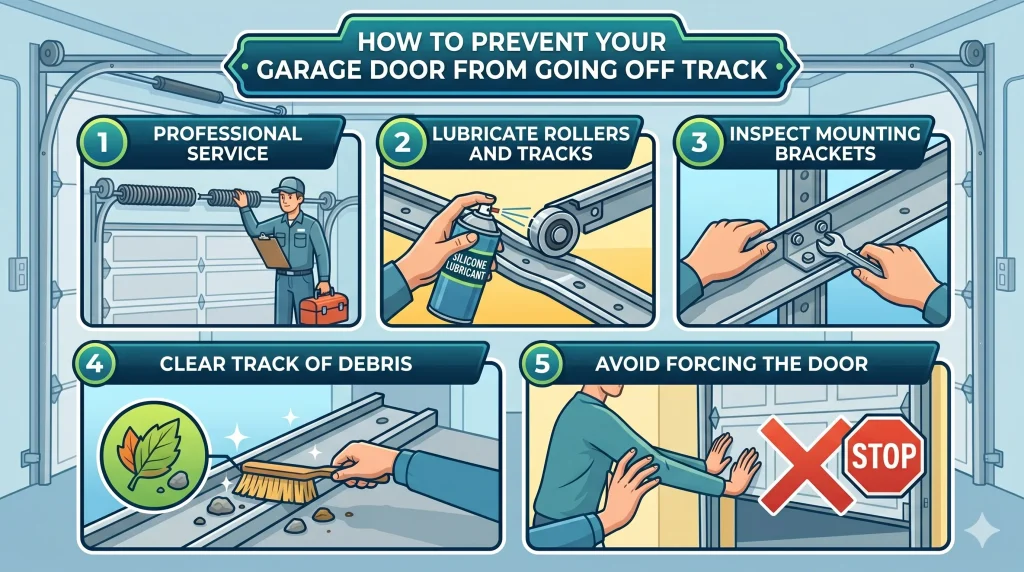
Preventing a garage door from going off track comes down to consistent maintenance that keeps every component in proper working condition.
Here are the most effective ways to prevent your garage door from going off track:
- Schedule a professional garage door service at least once a year to inspect all moving parts
- Apply silicone-based lubricant to the rollers and metal tracks every few months for smooth operation
- Inspect mounting brackets and hardware regularly and tighten anything that has loosened from daily use
- Keep the track clear of dirt, debris, and any objects that could obstruct the rollers
- Never force the door open or closed if it resists movement at any point
Regular maintenance and routine inspections are the most effective way to avoid a garage door off track situation before it starts.
Find Out What Caused Your Garage Door to Come Off Track and Fix It the Right Way
A garage door off track never happens without a reason, and every cause covered in this guide points to one clear answer: stop using the door and get a professional to assess it before the damage spreads. Broken cables, worn rollers, bent tracks, and broken springs all require trained hands and the right tools to resolve correctly.
First Class Garage Doors has been helping homeowners across Los Angeles safely and correctly get their garage doors back on track. Contact us or give us a call today, and let one of our trained technicians find out exactly what caused your garage door to come off track and fix it the right way.
Frequently Asked Questions
Is it safe to repair a garage door wheel that is off track by myself?
No, it is not. Garage door components operate under extreme tension, and handling them incorrectly can result in serious injury. A professional technician has the training and equipment to handle the job correctly.
What steps should I follow to restore my garage door to the track?
Stop using the door immediately and pull the emergency release cord to disconnect the opener. A licensed garage door repair professional should inspect and restore the door to ensure the repair is done correctly.
When should I call a professional to repair a garage door that is off track?
Call a professional as soon as the door appears crooked, produces unusual noises, or no longer moves smoothly along the track. Waiting too long allows the damage to spread to other components in the system.
Are there quick fixes for a garage door that has come off track?
No, there are not. Temporary patches do not address the root cause and can make the overall damage worse over time. A proper inspection by a trained technician is always the most dependable course of action.
How much does it typically cost to repair a garage door track?
The average cost of garage door track repair varies depending on the extent of the damage and the replacement parts required. Reach out to our team for an accurate assessment and a fair quote based on your specific situation.
What causes a garage door to go off track?
The most common reasons include broken cables, worn-out rollers, bent tracks, broken springs, and impact damage. Contributing factors like lack of regular maintenance and aging components also increase the likelihood of a derailment.
Can the same method work for different garage door models when fixing an off-track issue?
No, it cannot. Different garage door models have different track systems, hardware, and components that require individual assessment. Our technicians evaluate each door separately to determine the most effective repair approach.
How do I adjust the garage door tracks to prevent them from going off track again?
Track adjustments should always be handled by a professional to avoid causing further misalignment or damage. Our team inspects the full system, tightens mounting brackets, and tests the door through several cycles to confirm everything is working correctly.
Where can I find emergency garage door repair services near me?
Searching for a garage door off track near me service in Los Angeles will bring up local technicians who can respond quickly to urgent repairs. Our team covers Los Angeles and the surrounding areas and is available to restore your door to proper working condition as soon as possible.


