



A garage door off track stops everything in its path and turns a normal morning into a stressful situation that demands immediate attention. Understanding how to fix a garage door off track the right way starts with knowing what caused it and what a proper repair actually involves.
Getting a garage door off track repair done correctly is not just about pushing the rollers back into place and calling it done. It takes a trained technician, the right tools, and a step-by-step process that addresses the root cause so the problem does not come back.
What Causes a Garage Door to Come Off Track?
When a garage door comes off track, something in the system has already been building up stress for longer than most people realize, and the visible problem is rarely the whole story.
Here are the most common reasons a garage door ends up off track:
- Cracked or flattened rollers that can no longer grip the track properly
- Bent or dented metal tracks that break the door’s travel path
- Loose mounting brackets that allow the track to shift away from the wall
- A broken cable that drops one side of the door and pulls the rollers out
- Loose hardware on hinges or track connections that causes wobbling during movement
- Accidental impact from a vehicle or object that knocks a panel out of alignment
- Temperature fluctuations that cause metal tracks to gradually shift out of position
To understand exactly what conditions push a garage door to this point, read our guide on What Would Cause a Garage Door to Come Off Track?, which breaks down every root cause that leads to a full off-track situation.
Warning Signs Your Garage Door Is Off Track
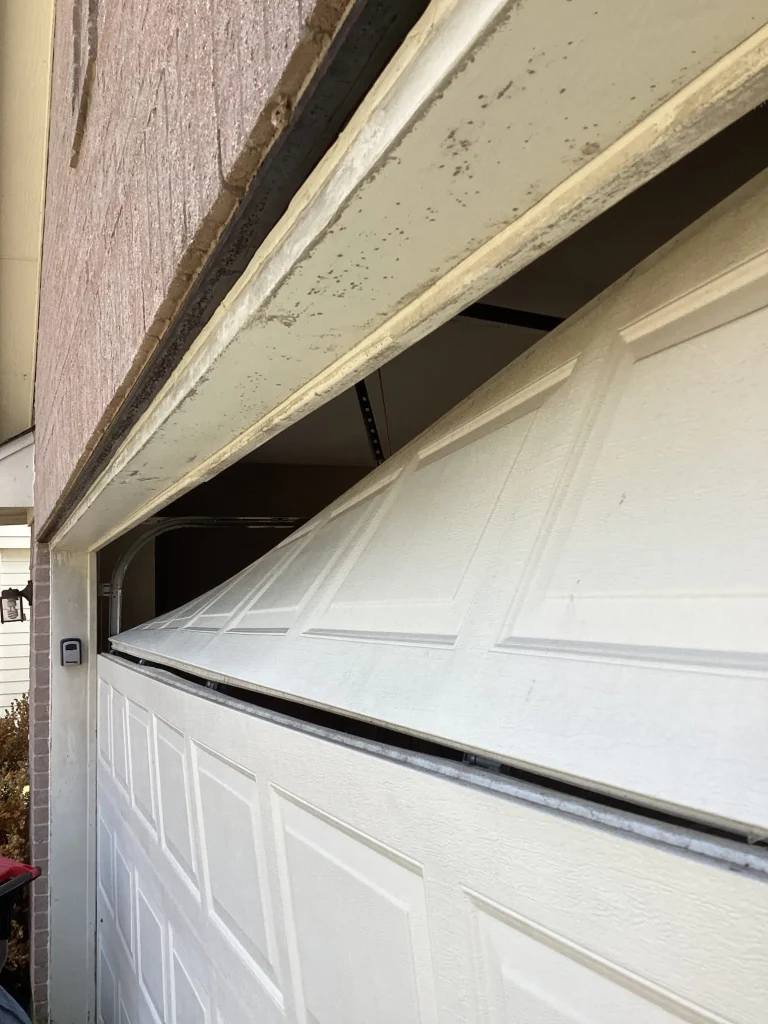
Knowing the warning signs of a garage door off track situation early is what separates a minor repair from a full system breakdown.
Here are the warning signs your garage door is off track:
- Grinding or scraping sounds mean a roller is dragging against a damaged track
- Jerky or uneven movement means the rollers are no longer seated correctly
- Visible gaps between the rollers and track mean the door has left its path
- One side sitting lower than the other points to a cable or roller failure
- A door that stops midway means the track is blocked, bent, or damaged
- Noise getting louder with every cycle means the problem is worsening
To catch these warning signs before they escalate into a more costly problem, read our guide on Warning Signs Your Garage Door Is Off Track, which covers every indicator that suggests a professional needs to take a look.
Garage Door Off Track: Can You Fix It Yourself or Do You Need a Pro?
A garage door off track repair looks straightforward from the outside, but the risks involved make it a job that almost always calls for a trained professional.
| Situation | DIY | Professional |
| Minor track misalignment | Possible but risky without the right tools | Recommended for a precise and lasting fix |
| Bent or damaged tracks | Not recommended as improper bending can worsen the damage | Required to reshape or replace the track correctly |
| Broken cables or springs | Never attempt as both operate under extreme tension | Required as this involves specialized tools and training |
| Loose hardware or bolts | Manageable if you can identify exactly what needs tightening | Recommended to ensure nothing is missed during inspection |
| Full derailment on both sides | Never attempt as the door can collapse without proper support | Required as this involves realigning the entire system |
| Repairs requiring special tools | Not recommended, as using the wrong tool causes further damage | Required as professionals carry the exact tools needed |
Attempting a garage door off track repair without the right training and tools puts both the door and everyone around it at risk.
What Can Homeowners Do First Without Worsening the Damage
Acting quickly and carefully before a technician arrives can stop a garage door off track situation from turning into a much larger and more expensive problem.
Here is what homeowners can do first without worsening the damage:
- Stop using the door immediately to keep the rollers from pulling further out
- Never force the door open or closed, as it bends the track and strains the opener
- Pull the emergency release cord to disconnect the opener and block accidental activation
- Do a visual check on both sides for gaps, bends, or anything visibly out of place
- Keep the area around the door clear for the technician to work without obstruction
- Call a professional as soon as possible to stop the damage from spreading further
To learn exactly how much risk a compromised garage door carries before a professional arrives, read our guide on Is a Garage Door Off Track Dangerous?, which details every safety concern that comes with a door that has left its track.
How Pros Fix a Garage Door Off Track
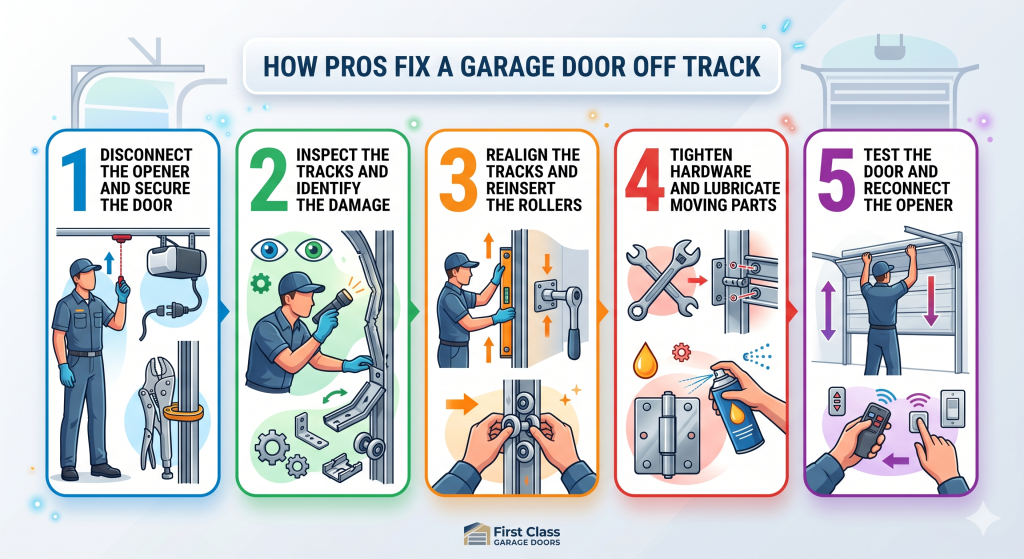
Step 1: Disconnect the Opener and Secure the Door
Cutting power and securing the door is the first step every professional takes before touching any part of the system.
Here is what happens during this step:
- Power to the automatic opener gets cut to stop accidental activation
- Pulling the emergency release cord disengages the motor for manual operation
- Locking pliers get clamped onto the track below the lowest roller
- Securing the door keeps it from shifting or dropping during the repair
- Every component stays in position until the technician is ready to work
Skipping proper preparation is one of the leading reasons agarage door opener repair becomes necessary, alongside the need for an original track fix.
Step 2: Inspect the Tracks and Identify the Damage
A full inspection tells the technician exactly what caused the garage door off track before any physical repair begins.
Watch for what professionals check during this step:
- Both vertical and horizontal track sections are examined for bends or separations
- Garage door rollers are checked for cracks, chips, or flat spots
- Mounting brackets are inspected to confirm none have pulled away from the wall
- Cable ends and hardware connections are reviewed for fraying or loosening
- Pinpointing the cause of the problem at this stage determines the entire repair plan
Knowing what to look for during an inspection is what separates a repair that holds from one that fails again within weeks.
Step 3: Realign the Tracks and Reinsert the Rollers
Getting the garage door track back into its correct position is the core of the entire repair process.
Here is what realignment and roller reinsertion involve:
- Mounting bracket bolts get loosened with a socket wrench to allow repositioning
- A level confirms the track is perfectly vertical before bolts are retightened
- Brackets get secured back to the wall only after alignment is confirmed on both sides
- Pliers open the edge of the track just enough to guide the rollers back in
- Work starts at the lowest roller and moves upward across the entire garage door
Restoring the track to its original position allows the door to complete a full open-and-close cycle without resistance.
Step 4: Tighten Hardware and Lubricate Moving Parts
Every bolt, hinge, and roller gets full attention during this step to restore the door to working condition.
Here is what professionals do during this step:
- All bolts and screws across the track, hinges, and panels get tightened to spec
- Loose hardware identified during inspection gets replaced rather than just retightened
- Silicone-based lubricant gets applied to the metal tracks, rollers, and hinges
- Lubrication reduces friction and extends the life of all moving parts
- Proper hardware tension and lubrication work together to maintain smooth operation
Tightening andlubricating every component after a repair keeps the door performing correctly long after the technician leaves.
Step 5: Test the Door and Reconnect the Opener
Confirming smooth operation before reconnecting the opener is the final checkpoint in every professional garage door off track repair.
Here is what professionals check during the final test:
- Manual cycles get performed several times to check for resistance
- Noise, hesitation, or uneven movement gets addressed before reconnecting
- Balance gets tested by lifting the door to the halfway point
- A door that holds its position confirms the repair was done correctly
- The opener gets reconnected and tested with the wall button and remote
Every part of the system gets confirmed to be working correctly before a professional considers thegarage door repair complete.
How Much Does Garage Door Off Track Repair Cost?
Several factors influence what a homeowner in Los Angeles, CA can expect to pay for a garage door off track repair.
Here are the factors that affect the cost of a garage door off track repair:
- Type and extent of the damage found during inspection
- Whether rollers, cables, or track sections need replacement
- Amount of labor and time the repair requires
- Complexity of the door system such as single, double, or custom
- Location and accessibility of the property in Los Angeles, CA
Average costs may depend on the combination of these factors, making a professional inspection the most accurate way to get a reliable estimate.
How to Care for Your Newly Repaired Garage Door Track
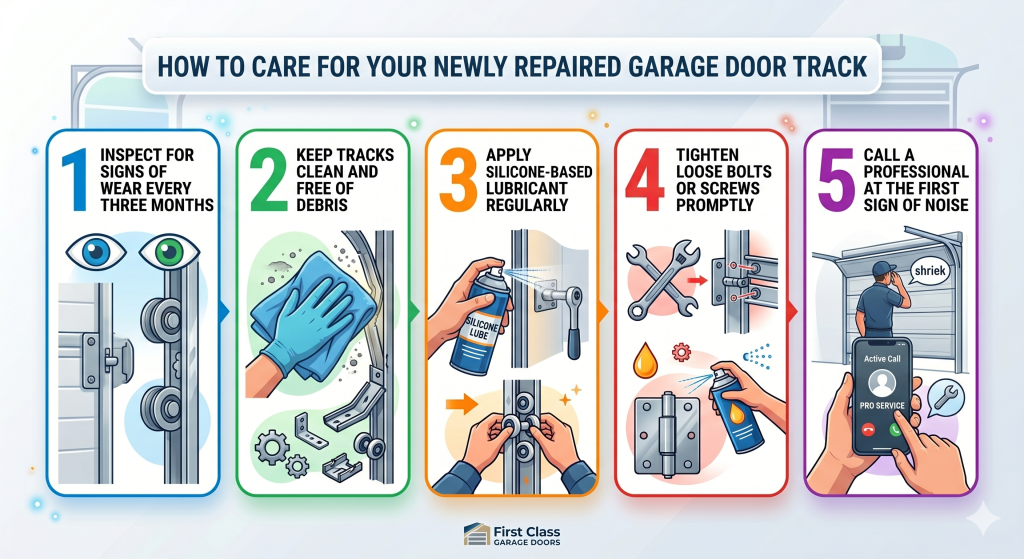
Caring for a newly repaired garage door track keeps the door operating correctly and prevents the problem from recurring.
Here is how to care for your newly repaired garage door track:
- Inspect the tracks, rollers, and hardware every three months for signs of wear
- Keep the tracks clean and free of dirt, dust, and debris that cause friction
- Apply silicone-based lubricant to the tracks, rollers, and hinges every three to six months
- Tighten any loose bolts or screws before they cause the track to shift
- Call a professional at the first sign of noise, resistance, or uneven movement
Regulargarage door maintenance after a garage door track repair is the most effective way to extend the life of the entire system and avoid repeat repairs.
Professional Repair Is Always the Best Fix for a Garage Door Off Track
A garage door off track problem never resolves on its own, and every hour it goes unaddressed adds more stress to the rollers, cables, and tracks. Every cause and step covered in this guide points to one clear answer: stop operating the door and call a professional who knows exactly what to do.
First Class Garage Doors has been serving homeowners across Los Angeles, CA with thorough and precise garage door off track repairs that restore full function the first time. Contact us or give us a call today, and let our trained technicians handle the repair so your garage door runs smoothly and stays on track for the long haul.
Frequently Asked Questions
Can a garage door go off track if the opener is working fine?
Yes, a working opener does not prevent the door from coming off track. The opener controls movement but cannot compensate for worn rollers, bent tracks, or loose hardware pulling the door out of position.
Do both sides of a garage door need to be repaired if only one side came off track?
Not always, but a professional will inspect both sides of the garage door track to confirm nothing else has been compromised. An unchecked side with early signs of wear or misalignment will eventually lead to another garage door off track situation.
Is it possible to prevent a garage door from coming off track again after a repair?
Yes, consistent upkeep after a repair reduces the likelihood that the problem will return. Keeping the tracks clean, the hardware tight, and the rollers lubricated goes a long way in maintaining door performance.
Can a heavy garage door come off track more easily than a lighter one?
Yes, heavier doors place significantly more stress on the rollers and tracks with every cycle. That added weight causes worn or misaligned components to fail much faster than they would on a lighter door.
How do I find a trusted garage door off track repair service?
Searching garage door off track near me is a practical first step when looking for local help. Always verify reviews, licensing, and experience before booking a technician to ensure the job is done correctly.
Can garage door rollers be reused after a door comes off track?
It depends entirely on the condition of the rollers after the incident. A professional will inspect each roller closely and determine whether it is still structurally sound or needs to be replaced before reinstallation.
Will my garage door come off track again if only the rollers are replaced?
Possibly because bent tracks or loose hardware left unaddressed will cause the issue to recur, regardless of new rollers. A complete inspection ensures every contributing factor gets resolved during the same visit.
Can a garage door come off track during a power outage?
Yes, improper manual operation, such as not correctly pulling the emergency release cord, can cause the rollers to exit the track. Following the correct steps before manually moving the door prevents unnecessary damage during an outage.
Is a garage door off track repair different for a two-car garage versus a single-car garage?
The repair process follows the same steps, but a two-car garage involves more track length, more hardware, and more components to inspect. That added scope means the repair may take longer and require closer attention to both sides of the system.


