



A garage door that won’t open puts the entire household at a standstill, and the real question is whether the problem is worth fixing or if it is time to start fresh with a replacement. That decision is not always obvious, especially when the door appears to be working one day and completely unresponsive the next.
Understanding the difference between a repair and a replacement starts with knowing what is actually wrong with the door and how far the damage has spread. A garage door repair can address isolated problems, but a door that keeps breaking down tells a different story about the health of the entire system.
Is a Garage Door That Won’t Open Always Worth Repairing?
A garage door that won’t open doesn’t always mean the entire system needs to be replaced, and determining whether repair or replacement is the right approach depends entirely on what is actually wrong with the door.
Here is what determines the answer:
- Dead batteries, tripped breakers, or dirty sensors are worth repairing
- Isolated part failures can be fixed without replacing the full system
- Recurring breakdowns signal that repairs are no longer a long-term solution
- Damage to multiple components often makes replacement more practical
- A door older than 15 years with frequent failures needs full replacement
To get a full picture of every major cause behind a garage door that refuses to move, read our guide on Garage Door Won’t Open or Respond? Here’s What’s Going Wrong, which covers every reason a garage door stops responding.
Why My Garage Door Won’t Open All the Way
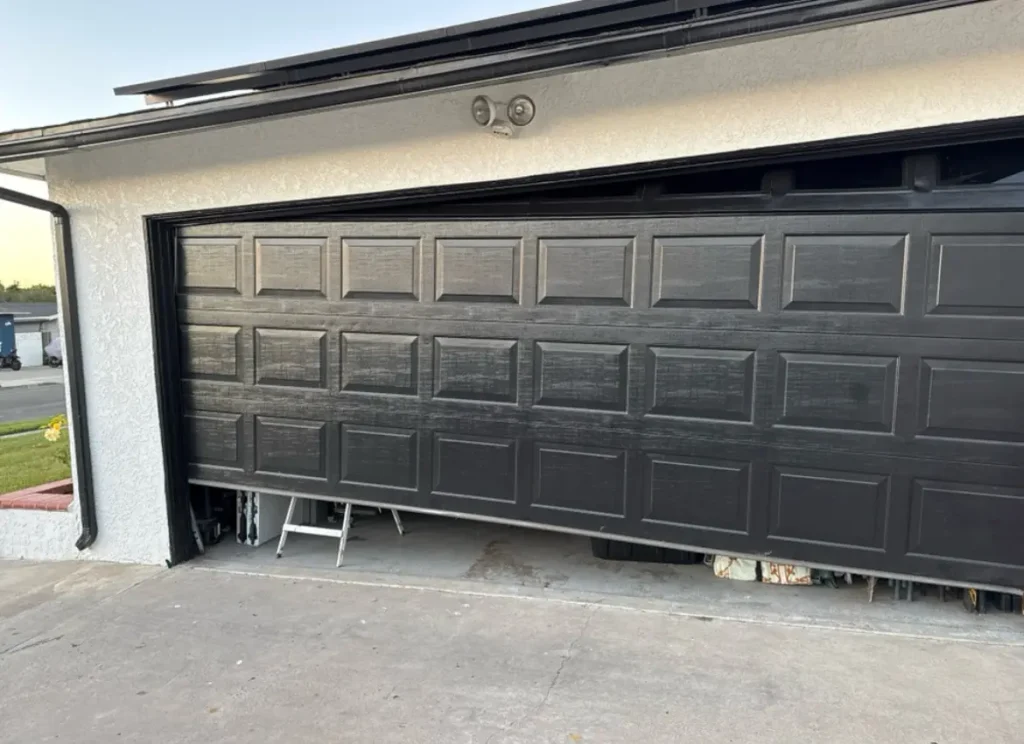
A garage door that refuses to open all the way is almost always pointing to a specific mechanical failure that needs to be identified before the problem gets worse.
Here are the most common reasons:
- Broken or worn-out springs can no longer support the full weight of the door
- Frayed or snapped cables cause the door to move unevenly and stop midway
- Bent, blocked, or misaligned tracks prevent the rollers from traveling the full path
- A failing opener motor loses the power needed to complete a full open cycle
- Misconfigured limit settings tell the door to stop before it fully opens
Identifying the exact culprit behind a garage door that won’t open all the way is the first step toward deciding whether a repair or replacement is the right call.
Signs a Garage Door Needs Repair or Replacement
A garage door that keeps acting up is giving clear signals about whether the system needs a targeted repair or a full replacement.
Here are the signs to watch for:
- Loud banging or grinding sounds point to broken springs or worn components
- Uneven or jerky movement signals a cable, roller, or track problem
- Door reversing before fully closing means sensors are dirty, misaligned, or failing
- Visible rust, dents, or cracked panels suggest structural integrity is compromised
- Frequent breakdowns in a short period indicate the system is no longer holding up
Recognizing these signs early helps avoid the need for emergency garage door repair and makes the decision to repair or replace much clearer.
Garage Door Won’t Open? Here’s When to Repair or Replace
Common Repairs a Technician Can Fix
Many garage door issues stem from simple electrical or alignment problems that require only minor adjustments or part replacements.
Here is what typically falls under a standard repair:
- Dead remote batteries or a tripped circuit breaker are always checked first
- Dirty or misaligned safety sensors can be cleaned and adjusted
- Worn rollers and loose hinges are fixed through a routine part swap
- An engaged manual lock is a simple and commonly overlooked fix
- Misconfigured limit settings on the opener can be recalibrated
To learn more about getting the sensors back in working order, read our guide on How to Reset the Sensors on a Garage Door That Won’t Open, which covers every step of the sensor realignment process.
Repairs That Require a Professional Only
Certain garage door components store significant energy and must be handled only by a professional garage door technician with the right tools and training.
Never attempt these without professional help:
- Snapped torsion or extension springs require immediate professional attention
- Frayed or snapped cables make the door dangerously unbalanced
- Severely warped tracks pulling from the wall need professional realignment
- Motor producing plastic shavings means internal gears need replacing
- Damaged wiring or broken sensor mounting needs garage door sensor repair
Handling high-tension components without proper training puts the door and everyone nearby at serious risk.
When a Full Garage Door Replacement Makes More Sense
Repairs have a limit, and recognizing when that limit has been reached prevents repeated service calls on a system that has already run its course.
Replacement becomes the stronger option when:
- Multiple major components failing at once make individual repairs impractical
- Severely dented, warped, or rusted panels mean structural integrity is lost
- Outdated opener units lack modern safety features or smart connectivity
- Logic board failure on an obsolete model makes replacement parts impossible to source
- A door older than 15 years with recurring breakdowns has reached its functional limit
To keep the garage accessible while waiting for a full replacement, read our guide on Garage Door Won’t Open? How to Manually Open It Safely, which walks through the entire manual release process step by step.
Key Factors That Affect the Repair or Replace Decision
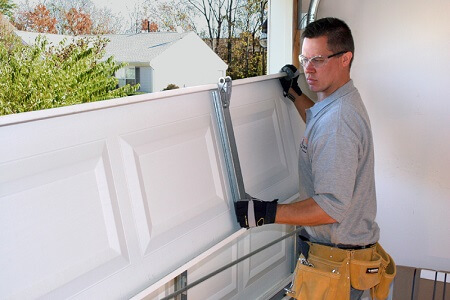
Making the repair-or-replace decision comes down to a few conditions that reveal the true state of the garage door system.
Here are the key factors to consider:
- Age of the door and opener, systems older than 15 years, lean toward replacement
- The extent of damage across multiple components tips the scale toward replacement
- The frequency of breakdowns signals that the system is failing as a whole
- Safety risks from outdated components make replacement the smarter option
- The overall condition of the hardware determines how much life is left in the system
Weighing these factors together gives homeowners in Los Angeles a clearer picture of which direction makes more sense for their situation.
How to Keep a Garage Door Running After a Repair or Replacement
Regular upkeep after a garage door repair or replacement is what keeps the system performing well and significantly extends its service life.
Here is what consistent garage door maintenance looks like:
- Lubricate rollers, hinges, springs, and tracks every six months to reduce friction and wear
- Inspect the door visually every few months for rust, dents, and loose hardware
- Test manual operation by pulling the emergency release cord at least once a year
- Keep the sensor path clear of dust, dirt, and small items at all times
- Schedule a professional inspection once a year to catch developing issues early
Los Angeles homeowners who stay consistent with these habits get more years out of their system and avoid unnecessary service calls down the line.
When a Garage Door Won’t Open, Repair or Replacement Starts With the Right Call
A garage door that won’t open always points to something specific, and identifying the problem correctly leads to a lasting solution. Understanding the line between a repair and a full replacement saves time, money, and unnecessary stress for any homeowner dealing with a door that refuses to respond.
First Class Garage Doors brings years of hands-on experience in the garage door industry to every diagnosis, repair, and replacement job across Los Angeles, CA. Contact us or give us a call today, and let our team assess what the system needs to get the door working the way it should again.
Frequently Asked Questions
Can a garage door that won't open be partially replaced instead of fully replaced?
Yes, partial replacement is possible in many cases. Individual components such as springs, cables, rollers, or panels can be swapped out without replacing the entire door, as long as the overall structure remains sound.
How long does a garage door repair or replacement typically take in Los Angeles?
Most standard repairs are completed within a few hours during a single service visit. Full replacements may take longer depending on the scope of the job and whether custom parts or door sizes are involved.
Which parts of a garage door wear out the fastest and can cause a door to stop opening?
Springs, cables, and rollers tend to wear out before other components because they are in constant motion during every open-and-close cycle. Lack of lubrication and heavy daily use significantly accelerate the breakdown of these parts.
Why does a garage door that won't open all the way keep stopping at the same spot?
Understanding why my garage door won't open all the way starts with checking the tracks, rollers, and limit settings on the opener. A consistent stopping point usually indicates a physical obstruction, a track misalignment, or a limit setting that needs recalibration by a technician.
What happens to the rest of the garage door system if a repair is delayed?
Delaying a repair puts extra stress on the components surrounding the damaged part. Over time, that added strain causes additional parts to wear down faster and turns a straightforward fix into a more involved job.
Is a noisy garage door always a sign that repair or replacement is needed?
Not always, but unusual sounds like grinding, banging, or squeaking should never be ignored. A technician can determine whether the noise indicates a minor lubrication issue or a more significant mechanical problem that requires immediate attention.
How do professionals assess whether a garage door needs repair or replacement?
A professional garage door technician inspects the system's age, the condition of the springs, cables, tracks, and opener, and the door's overall structural integrity. That full assessment gives homeowners a clear picture of what the system actually needs.
Can an old garage door opener be replaced without replacing the entire door?
Yes, the opener and the door are separate systems that can be replaced independently. Replacing just the opener is a practical option when the door panels and hardware are still in good condition.
What should Los Angeles homeowners do immediately when a garage door won't open?
Start by checking the basics, such as remote batteries, the power connection, and the sensor indicator lights, before calling for service. If those checks do not resolve the problem, contacting a professional garage door technician is the most practical next step to avoid making the situation worse.


