



A garage door becomes quieter once garage door maintenance covers the moving parts and tightens any loose hardware before the noise turns into a bigger mechanical issue. Most homeowners can handle these fixes in under an hour using nothing more than basic tools and a little attention.
Homeowners across Los Angeles often notice unnecessary noise creeping in long before a garage door actually fails, and spotting it early keeps a small annoyance from becoming a costly repair. This guide walks through the early signs, what each sound means, and the steps that restore quiet, reliable movement to the door.
Key Takeaways
- Squeaks, grinding, and rattling each point to a different mechanical issue
- Regular lubrication solves the majority of noisy garage door problems
- Nylon rollers cut down on metal-to-metal grinding sounds significantly
- Loose hardware is one of the easiest and most overlooked fixes
- Insulation and vibration isolators reduce noise that travels into the home
- Some noise signals a deeper issue that goes beyond routine maintenance
Signs a Garage Door Is Getting Too Loud
A garage door that operates correctly should move through a full cycle with only a soft hum from the motor and a light amount of mechanical sound from the tracks.
Watch for these early indicators that a door has become louder than normal:
- A sharp increase in volume during opening or closing cycles
- Vibrations that carry into nearby rooms or through the garage door tracks
- New sounds that were not present during previous months of regular use
- Noise that shifts in pitch or intensity depending on the temperature outside
- Family members or neighbors mentioning the noise for the first time
Noticing these changes early gives a homeowner the chance to address issues before the garage door opener or other components are put under unnecessary strain.
What Does Each Garage Door Sound Mean
A garage door communicates its mechanical condition through sound, and learning to tell these signals apart saves time when narrowing down the fix.
| Sound | Meaning | Cause |
| Squeaking | The door needs lubrication at key contact points | Dry hinges or rollers |
| Grinding | Metal is rubbing where it should be gliding smoothly | Worn metal rollers against the tracks |
| Rattling | Hardware has come loose somewhere in the system | Loose nuts, bolts, or brackets |
| Loud bang | A component has failed or is failing under tension | A spring losing tension or snapping |
| Humming or buzzing | The opener motor is under strain | Aging or overworked opener motor |
To break down each of these sounds by cause and severity, read our guide on What Do Different Garage Door Sounds Mean?, which explains what is happening mechanically every time the door makes an unfamiliar sound.
Common Causes of a Noisy Garage Door
Noise complaints usually trace back to a handful of recurring mechanical issues, and identifying the right one helps narrow down which fix actually solves the problem.
Here are the most common causes behind a noisy garage door:
- Dry or worn hinges and rollers, common with older doors and improper lubrication
- Loose hardware and mounting brackets, common with doors used multiple times daily
- Worn metal rollers, common with sectional garage door systems
- An unbalanced or aging opener, common with units past their expected lifespan
- Dirt accumulation in the tracks, common with garages exposed to outside elements
To uncover a complete, detailed breakdown of each individual cause behind the noise, read our guide on What Causes a Noisy Garage Door?, which explains exactly what is driving the noise in far more detail.
Ways to Keep a Garage Door Quiet
Lubricate Moving Parts
Regular lubrication is the single most effective habit for keeping a garage door quiet, as it directly targets the friction that causes most squeaks.
Follow these steps for proper lubrication of the door’s moving parts:
- Use a dedicated garage door lubricant or white lithium grease instead of a degreasing product
- Spray or drop grease onto the hinges, roller bearings, and torsion springs
- Lubricate the top and bottom of the automatic opener rail and the arm connection
- Avoid putting any grease or oil directly inside the metal tracks
To see exactly how often this maintenance step needs to happen, read our guide on How Often to Lubricate a Garage Door to Prevent Noise, which lays out a full schedule based on how frequently the door gets used.
Upgrade to Nylon Rollers
Metal rollers tend to grind loudly against the tracks over time, while nylon rollers glide with far less mechanical noise.
Here is what the upgrade to nylon rollers typically involves:
- Replace steel or hard plastic rollers with nylon rollers that use sealed ball bearings
- Confirm the roller stem length matches the existing garage door tracks
- Have a professional technician handle the swap if the door uses a torsion spring system
- Check for uneven wear across all rollers during the replacement
Nylon absorbs vibration rather than transferring it, which is why this garage door roller replacement reduces the grinding sound steel rollers eventually develop.
Tighten Loose Hardware
Loose parts vibrate heavily against the metal panels during every cycle, and tightening them is one of the simplest steps a homeowner can take without professional help.
These are the hardware points worth checking first:
- Every nut, bolt, and screw along the track brackets
- Hinge brackets connecting each garage door panel section
- The mounting of the garage door opener to the ceiling
- Roller brackets where loose hardware tends to shift first
A quick pass with a socket wrench once every few months keeps these fasteners from loosening again between regular maintenance visits.
Install Vibration Isolators and Pads
Loud vibrations from the opener motor often travel through the ceiling and into the living space above or beside the garage.
Consider these steps for isolating vibration at the source:
- Mount rubber isolation pads between the opener’s hanging brackets and the ceiling
- Add foam or rubber padding where the track meets the wall studs
- Inspect existing pads periodically since they compress and wear down over time
- Replace worn pads before they stop absorbing vibration effectively
Stopping vibration from spreading through the framing protects a home’s peace far more than any adjustment made to the door itself.
Insulate the Garage Door Panels
An uninsulated garage door tends to amplify sound because hollow panels have nothing to absorb the vibration moving through them.
Options for adding insulation to an existing setup include:
- Installing an insulated garage door with a sandwich-style panel core
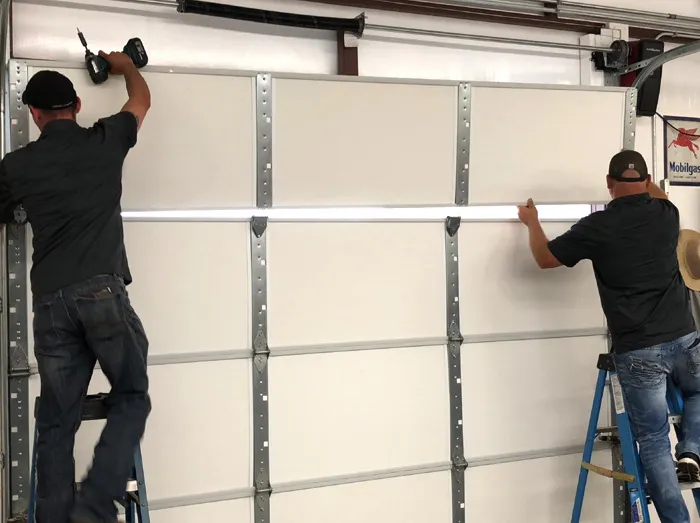
- Adding DIY foam insulation panels to the inside of each section
- Sealing gaps where sound can escape around the frame
- Checking weatherstripping since it affects both noise and energy efficiency
Insulation panels dampen the hollow echo that uninsulated doors produce, and this upgrade often improves comfort inside the garage as a side benefit.
Replace the Opener Drive System
An old chain-drive opener is one of the loudest components in the entire system once it starts to wear down.
Here is what switching to a quieter drive system typically looks like:
- Replacing a chain-drive opener with a belt-drive or direct-drive unit
- Confirming the new opener matches the door’s weight and size requirements
- Scheduling professional installation given the electrical and mechanical work involved
- Testing the new opener across several full cycles before regular use
A belt-drive system eliminates the clanking sound a chain produces, making it a worthwhile investment for anyone seeking the quietest option.
What to Do If These Techniques Do Not Work
Noise that persists after each of the above fixes often signals a problem beyond routine adjustment, at which point closer inspection makes sense.
Take these steps if noise continues despite regular maintenance:
- Schedule a full inspection to check for spring tension or alignment issues
- Ask about the door’s overall balance, since an unbalanced door strains every component
- Request an assessment of the opener’s motor and drive system condition
- Confirm whether the noise is coming from the door itself or the surrounding structure
- Review recent garage door repairs or part replacements that may not have solved the root cause
A component that keeps making noise despite consistent effort has likely reached the end of its lifespan rather than simply needing another round of basic maintenance.
Get a Quieter Garage Door With Help From the Pros
A noisy garage door rarely fixes itself, and the difference between a quick weekend project and a bigger repair often comes down to identifying the right cause early. The right fix, whether it is lubrication or a full opener replacement, keeps small issues from turning into expensive ones.
First Class Garage Doors works with homeowners throughout Los Angeles, CA, to pinpoint exactly what is causing a loud garage door and apply a fix that actually lasts, no matter how long the noise has been building. Contact us or give us a call today, and let our team help restore quiet, reliable movement to the entire garage door system.
Frequently Asked Questions
Can I lubricate a garage door too often?
Applying too much lubrication is possible and tends to attract dirt, which can create more friction over time. A light amount of dedicated garage door lubricant every few months is far more effective than frequent heavy applications.
Is a noisy garage door a sign that something is about to break?
Not every noise means a failure is imminent, but a sudden bang, a grinding sound, or a jerky movement often signals a component nearing the end of its life. Catching these signs early through professional service is usually enough to avoid an unexpected breakdown.
Will replacing rollers alone fix a noisy garage door?
Replacing metal rollers with nylon rollers addresses a large portion of noise complaints, but it will not resolve noise caused by loose hardware or an aging opener. A full inspection helps confirm whether rollers are the only source of the problem, especially for lasting noise reduction.
How much does it typically cost to quiet a noisy garage door?
Cost depends heavily on the door’s specific needs, since lubrication and tightening hardware cost very little compared to replacing an old opener or worn rollers. Homeowners should expect a modest cost for basic maintenance and a higher cost for larger component replacement.
Does a garage door opener affect how loud the entire system sounds?
An older chain-drive opener often accounts for a significant share of the total noise a garage door produces during each cycle. Upgrading to a belt-drive or direct-drive opener frequently makes a noticeable difference on its own.
Can weather make a garage door louder than usual?
Cold weather often causes metal components to contract, which can temporarily increase friction and noise until temperatures rise again. Humidity and moisture can also accelerate rust, which adds friction to rollers, garage door hinges, and tracks over time.
Is it normal for a new garage door to make some noise?
A new garage door typically produces a soft hum of the motor and light track sound, both considered part of optimal performance. Loud grinding, banging, or rattling is never normal, even on a newly installed system.
How long does it take to notice results after lubricating a garage door?
Most homeowners notice a difference within the very next use once fresh lubricant reaches the hinges, rollers, and torsion springs. Learning how to make garage door quieter starts with this one habit, and consistent lubrication over several months keeps that improvement from fading as parts naturally dry out again.
Should I attempt any of these fixes myself or call a professional right away?
Lubrication, tightening hardware, and basic inspection are safe for most homeowners to handle with simple steps and standard tools. Spring adjustments and opener replacement involve accessible springs and a potential safety hazard, which call for professional garage door service instead.


